
Quick Answer: To jump-start a car, park the working car close by with both engines off. Connect red to the dead battery’s positive terminal, red to the good battery’s positive, black to the good battery’s negative, and the last black clamp to bare metal on the dead car’s engine. Start the good car, wait a few minutes, then start yours.
Key Takeaways
- The cable order matters: red, red, black, then black to bare metal, never to the dead battery’s negative terminal.
- After the car starts, let it run at least 30 minutes, ideally while driving, AAA advises.
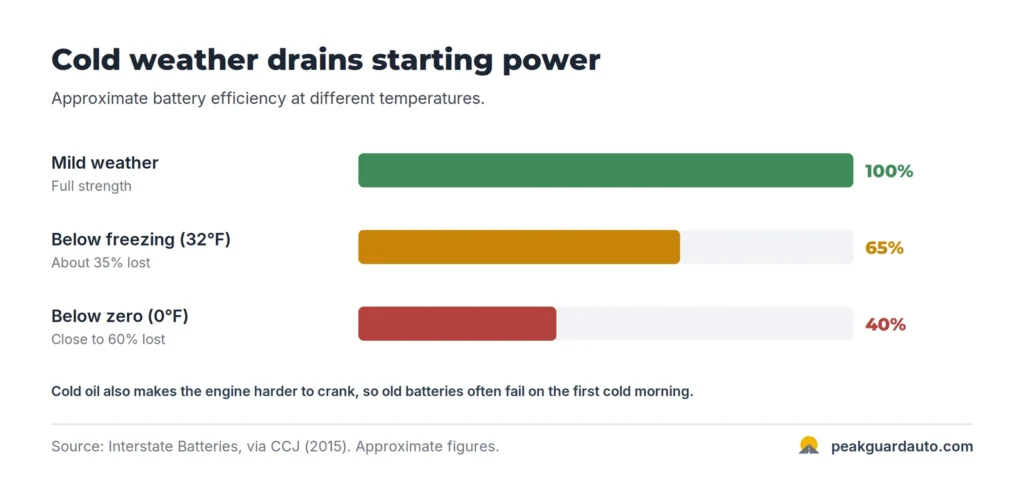
- Cold weather is hard on batteries. Interstate Batteries estimates a battery can lose about 35% of its efficiency below freezing.
- Most batteries last three to five years, according to AAA. If yours is older, have it tested before winter.
- If the car clicks but won’t start after a jump, the problem may be the alternator, starter or connections, not just the battery.
You turn the key or press the start button and get a click, a slow groan, or nothing at all. A dead battery is one of the most common reasons drivers call for roadside help: AAA Northeast says about a quarter of its roadside calls involve battery problems. Knowing how to jump-start a car safely can get you moving again without waiting for a tow. Doing it wrong can damage electronics or, in rare cases, cause a battery to spark or explode. Here’s how to do it right.
Table of Contents
What You Need
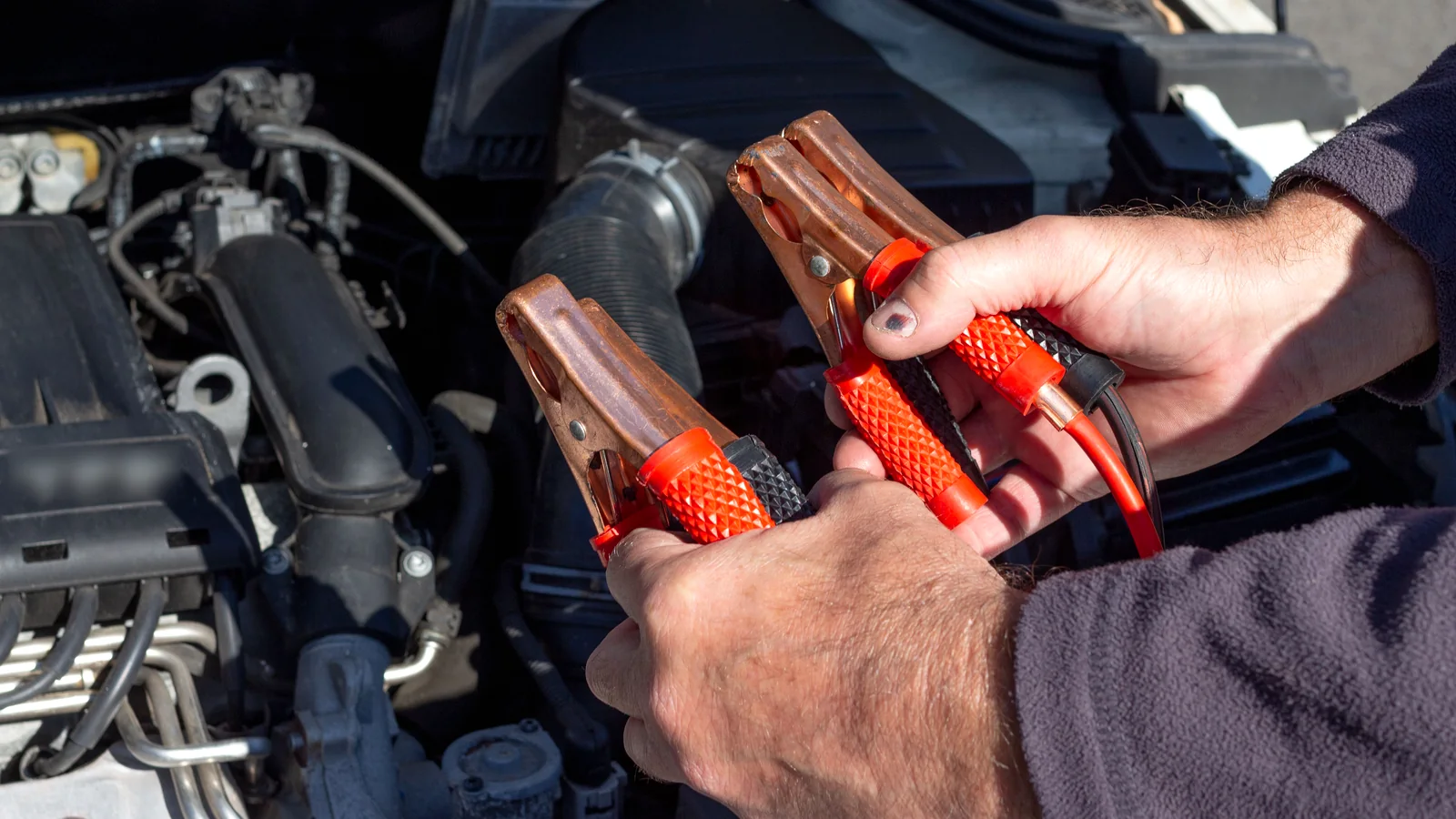
- Jumper cables in good condition, with no frayed wires or exposed metal. Longer cables make positioning the cars easier.
- A working car with a healthy battery of the same voltage (almost all passenger cars use 12 volts), or a charged portable jump starter.
- Your owner’s manual. Some cars, especially hybrids and many newer models, have specific jump-start points under the hood instead of direct access to the battery.
- Gloves and eye protection, if you have them.
How to Jump-Start a Car With Jumper Cables
1. Position the cars and turn everything off
Park the working car close to the dead one, ideally nose to nose or side by side, close enough for the cables to reach but not touching. Put both in park (or neutral with the parking brake on for a manual), and turn off the ignition, headlights, radio and other accessories in both cars, as AAA recommends.
2. Find the battery terminals
Open both hoods and locate the batteries. The positive (+) terminal is usually marked with a plus sign and often has a red cover. The negative (−) terminal has a minus sign. If the terminals are covered in white or green crust (corrosion), wipe them carefully so the clamps can make good contact.
3. Connect the cables in this order
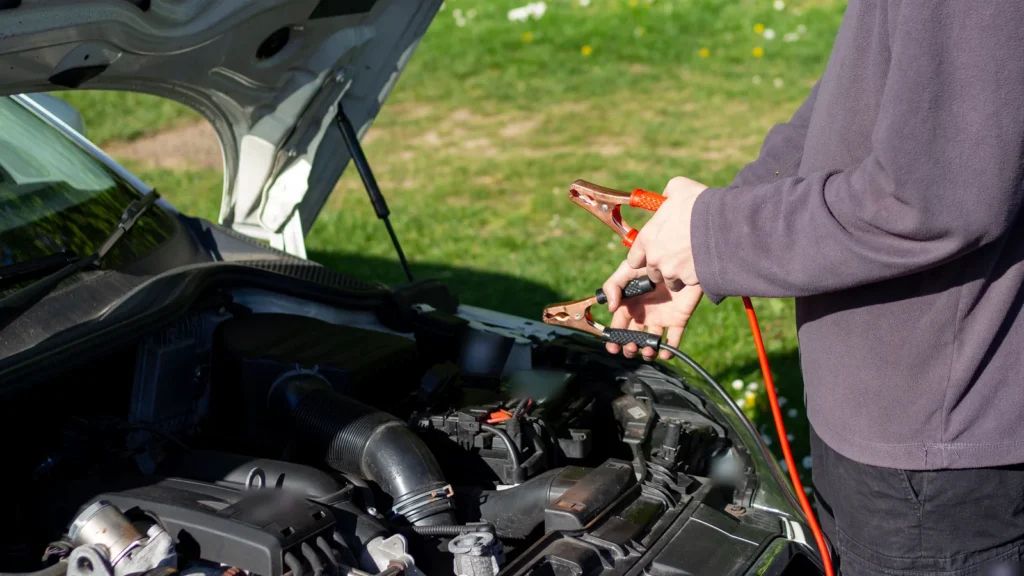
- Red clamp to the dead battery’s positive (+) terminal.
- Other red clamp to the good battery’s positive (+) terminal.
- Black clamp to the good battery’s negative (−) terminal.
- Last black clamp to a bare, unpainted metal surface on the dead car’s engine block or frame, away from the battery.
Keep the clamps from touching each other or any other metal while you work.
Why the last clamp goes on bare metal
Batteries can release small amounts of hydrogen gas, which is flammable. The final connection often makes a small spark. AAA warns against attaching that last clamp to the dead battery’s negative terminal because of the risk of a battery explosion. Clamping it to bare metal away from the battery keeps any spark at a safe distance while still completing the circuit.
4. Start the working car
Start the good car and let it run for a few minutes. This sends some charge into the dead battery.
5. Start the dead car
Try to start the car with the dead battery. If it doesn’t start, AAA suggests letting the booster car run a few more minutes and trying again. Avoid cranking the starter over and over in long bursts, which can overheat it.
6. Disconnect in reverse order
- Black clamp from the bare metal on the formerly dead car
- Black clamp from the good battery’s negative terminal
- Red clamp from the good battery’s positive terminal
- Red clamp from the formerly dead battery’s positive terminal
7. Keep the engine running
AAA recommends running the jumped car for at least 30 minutes, and driving it if possible, so the alternator can recharge the battery. If you shut it off right away at a store, you may need another jump.
How to Use a Portable Jump Starter
A portable jump starter is a compact battery pack that can start a car without a second vehicle. Many drivers now keep one in the trunk, especially in cold climates.
- Make sure it’s charged. A jump starter that’s been sitting for months may be drained.
- Turn off the car and all accessories.
- Connect the red clamp to the battery’s positive terminal and the black clamp to bare metal or the negative terminal, following the jump starter’s instructions.
- Turn the jump starter on and wait if it has a ready light.
- Start the car. Once it runs, turn off the jump starter and remove the clamps (black first, then red).
- Recharge the jump starter when you get home.
Always follow the specific instructions that come with your unit, since connection points and safety features vary.
Car Still Won’t Start? Troubleshooting
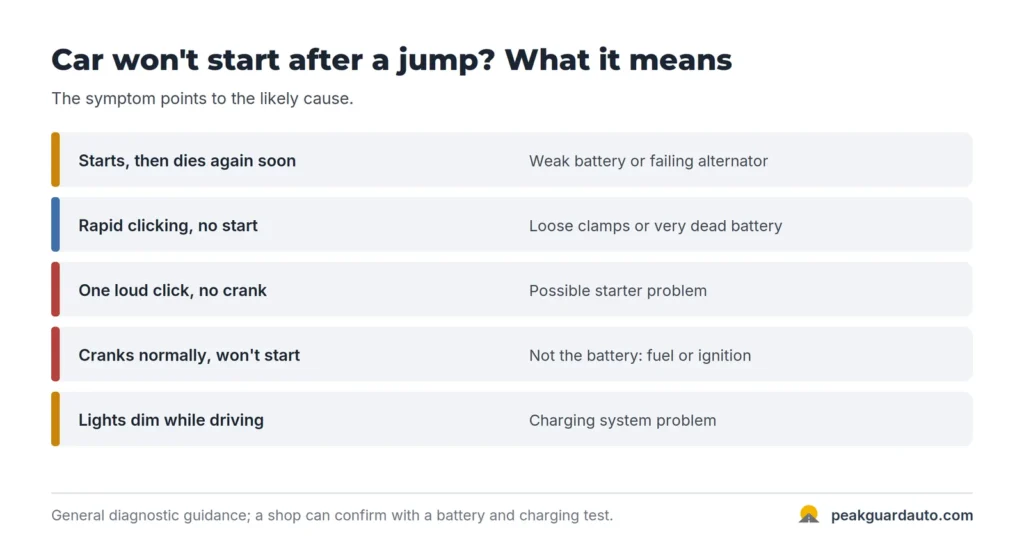
A jump that doesn’t work tells you something about the problem.
| What happens | Likely cause | What to do |
|---|---|---|
| Car starts with a jump but dies again soon after | Weak battery or failing alternator | Have the battery and charging system tested |
| Rapid clicking, no start, even with a jump | Poor cable connection or very dead battery | Check and reposition clamps; let the booster run longer |
| Single loud click, no crank | Possible starter problem | Call a mechanic or roadside help |
| Engine cranks normally but won’t start | Not a battery issue (fuel or ignition) | Stop jumping; have it diagnosed |
| Dash lights dim or flicker while driving | Charging system problem | Get it checked soon |
Based on general automotive diagnostic guidance. A shop can confirm the cause with a battery and charging system test.
Kelley Blue Book notes that a faulty alternator can stop a battery from recharging. That’s why a car that needs a jump every few days usually needs more than a new battery. If your dashboard battery light comes on, see our check engine light guide for how warning lights differ.
Why Batteries Die (Especially in Winter)
- Cold weather. Interstate Batteries has estimated that a battery loses about 35% of its efficiency below freezing and close to 60% below zero, while cold, thick oil makes the engine harder to crank. AAA says battery calls jump during winter storms and often become its top roadside call.
- Age. AAA says most batteries last three to five years, and less in hot climates, since heat wears them down over time.
- Short trips. AAA notes that frequent short drives may not fully recharge the battery.
- Accessories left on. Headlights, interior lights or a phone charger left plugged in can drain a battery overnight.
- Corroded or loose terminals, which block charging.
Consider a common winter scenario: a commuter in Minnesota with a five-year-old battery who only drives 10 minutes to work. Each start takes more power than the short drive puts back, and the first subzero morning is when it finally fails. A battery test in October would likely have caught it.
Jump-Starting Hybrids and Electric Cars
Hybrids and EVs also have a regular 12-volt battery that powers the computers and locks, and it can go flat too.
- They can usually receive a jump to that 12-volt battery, but check the owner’s manual. Many have dedicated jump terminals under the hood rather than easy battery access. Jumping an EV doesn’t add any driving range; it only wakes up the car’s systems.
- Don’t use an EV to jump another car unless the manual allows it. Nissan’s Leaf manual and Tesla’s Model S handbook both say not to use the car as a booster, and Tesla warns it can cause damage.
For more on how EV batteries hold up over time, see our guide to how long EV batteries last.
When to Replace Your Battery
Replace or test your battery if:
- It’s three or more years old. AAA recommends testing once a battery passes three years, and testing before every winter and summer.
- The engine cranks slowly, especially on cold mornings. AAA calls this a warning sign.
- You’ve needed more than one jump in a short time.
- The battery case is swollen, cracked or leaking.
Batteries generally cost about $45 to $250, according to Kelley Blue Book. Its estimate for a dealer replacement on a 2026 Kia K5 was $292 to $342 with labor. When buying, match the size and check the Cold Cranking Amps (CCA) rating, which measures starting power in the cold. For other wear items to budget for, see car maintenance costs by mileage.
When to See a Mechanic or Call for Help
- The battery is cracked, leaking or swollen. Don’t jump it. Call roadside assistance.
- You smell rotten eggs (sulfur) near the battery, a sign of a damaged or overcharging battery.
- The car won’t start after two or three jump attempts.
- The car needs jumps repeatedly, which points to the alternator or a hidden electrical drain.
- You’re unsure where to connect the cables, especially on a hybrid, EV or luxury car with jump points.
Frequently Asked Questions
Which jumper cable goes on first?
Red goes first, on the dead battery’s positive terminal. Then red on the good battery’s positive, black on the good battery’s negative, and the last black clamp on bare, unpainted metal on the dead car’s engine, away from the battery.
How long should I run my car after a jump-start?
AAA recommends at least 30 minutes, and driving it if possible, so the alternator can recharge the battery. Turning it off too soon may leave you needing another jump.
Why won’t my car start even with a jump?
Common reasons include loose or poorly placed clamps, a battery too dead to accept a charge, or a problem with the starter, alternator, fuel or ignition. If the engine cranks normally but won’t fire, the battery probably isn’t the cause.
Can jump-starting damage my car?
It can if the cables are connected in the wrong order or the clamps touch, which can cause sparks and harm electronics. Following the correct order and connecting the last clamp to bare metal greatly reduces the risk.
Can I jump-start a car in the rain?
Generally yes, with extra care. Keep the clamps and cable ends as dry as possible, make sure they never touch each other, and stay away from a battery that’s cracked or leaking.
How long do car batteries last?
AAA says most car batteries last about three to five years, and less in hot climates. Have yours tested once it’s more than three years old, especially before winter.
Conclusion
Knowing how to jump-start a car safely comes down to the right order: red to dead positive, red to good positive, black to good negative, and the last black to bare metal. Let the car run at least 30 minutes afterward, and if it keeps needing jumps, have the battery and alternator tested. With winter coming, check your battery’s age today, and consider keeping jumper cables or a charged portable jump starter in your trunk.
PeakGuard Auto provides general informational guidance only. Vehicle specifications, costs and safety requirements vary by make, model and location. Always consult your owner’s manual and a qualified mechanic before making repair or purchasing decisions.
Sources
- AAA Oregon/Idaho (January 2026): jump-start steps, cable order and safety. https://info.oregon.aaa.com/jump-starting-your-car-battery-a-safe-and-easy-guide/
- AAA Club Alliance (January 2026): winter battery problems and warning signs. https://newsroom.acg.aaa.com/aaa-warns-drivers-and-homeowners-to-prepare-for-winter-storm-dead-batteries-and-burst-pipes-expected-to-surge/
- AAA Northeast (October 2026): battery life, testing and share of roadside calls. https://magazine.northeast.aaa.com/daily/life/cars-trucks/aaa-car-battery-maintenance/
- AAA: how long car batteries last. https://www.aaa.com/autorepair/articles/how-long-do-car-batteries-last
- Interstate Batteries, via CCJ (2015): cold-weather battery efficiency loss. https://www.ccjdigital.com/interstate-battery-offers-cold-weather-cranking-tips/
- Kelley Blue Book: battery prices, CCA and alternator note. https://www.kbb.com/kia/k5/2026/battery-replacement/
- Tom’s Guide (2022), citing Nissan and Tesla manuals: jump-starting EVs. https://www.tomsguide.com/reference/can-you-jump-start-an-electric-car-heres-what-you-can-and-cant-do