
Quick Answer: Most EV batteries are built to outlast the car’s typical ownership period. Geotab’s 2026 study of more than 22,700 EVs found batteries lose about 2.3% of capacity per year on average, which projects to roughly 76% to 88% remaining after eight years depending on charging habits. Batteries are also covered by a warranty of at least 8 years or 100,000 miles in the U.S.
Key Takeaways
- Average battery degradation is about 2.3% per year, based on 2026 data from over 22,700 vehicles.
- Frequent high-power DC fast charging is the biggest factor; it can roughly double the rate of wear.
- Battery replacement is uncommon: one study of 15,000 EVs found only 1.5% needed a new battery outside of recalls.
- U.S. EVs carry a battery warranty of at least 8 years or 100,000 miles, usually covering capacity loss below about 70%.
- If a replacement is needed out of warranty, it typically costs $4,000 to $25,000+ depending on the vehicle.
Battery life is one of the biggest worries for people thinking about an electric car, and it’s easy to see why. The battery is the most expensive part of an EV, and nobody wants to face a five-figure bill a few years in. The good news is that we now have years of real-world data from tens of thousands of vehicles, and it’s more reassuring than many people expect. So how long do EV batteries last? This guide covers what the data shows, what affects battery life, what your warranty actually covers and what replacement costs if you ever need one.
Table of Contents
How Long EV Batteries Last: What the Data Shows
EV batteries rarely fail suddenly. Instead, they slowly lose capacity, which means a little less range each year. This is called degradation.
In April 2026, telematics company Geotab published one of the largest real-world studies on the topic, covering more than 22,700 electric vehicles across 21 models. It found an average degradation rate of 2.3% per year.
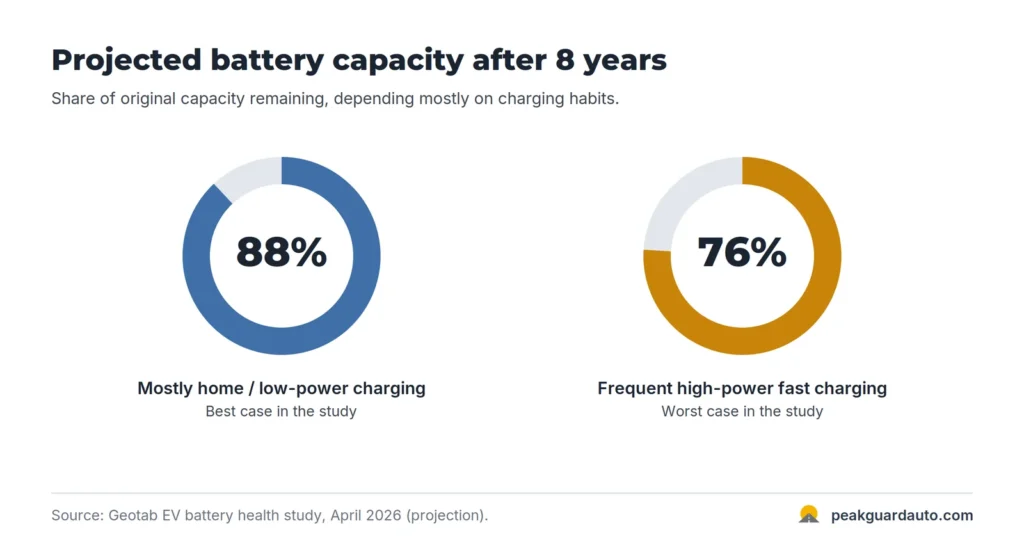
In practical terms, a car that started with 250 miles of range would lose roughly 5 to 6 miles of range per year at that average rate (2.3% of 250 miles is about 5.75 miles). After eight years, Geotab projects capacity of about 76% to 88% of the original, depending mostly on how the car is charged.
Degradation also isn’t perfectly even. Research from battery analytics firm Recurrent found that batteries tend to lose capacity faster in their first few years, then more slowly as they age. A small early drop isn’t a sign that the battery is failing.
How often do batteries actually need replacing?
Rarely. A Recurrent study of 15,000 EVs found that only 1.5% had their batteries replaced outside of recalls, and most replacements happened while the cars were still under warranty. Most EV owners will sell or trade the car long before the battery wears out.
What Affects EV Battery Life
Not every battery ages at the same rate. Geotab’s data points to three main factors.
1. How often you use fast chargers
This is the biggest one. Geotab found that high-power DC fast charging (above 100 kW) “is the single largest stressor” on battery health.
| Charging pattern | Average degradation per year |
|---|---|
| Rarely fast charges (under 12% of sessions) | 1.5% |
| Fast charges often, mostly lower power | 2.2% |
| Fast charges often, mostly high power (over 100 kW) | 3.0% |
Source: Geotab EV battery health study, April 2026 (22,700+ vehicles).
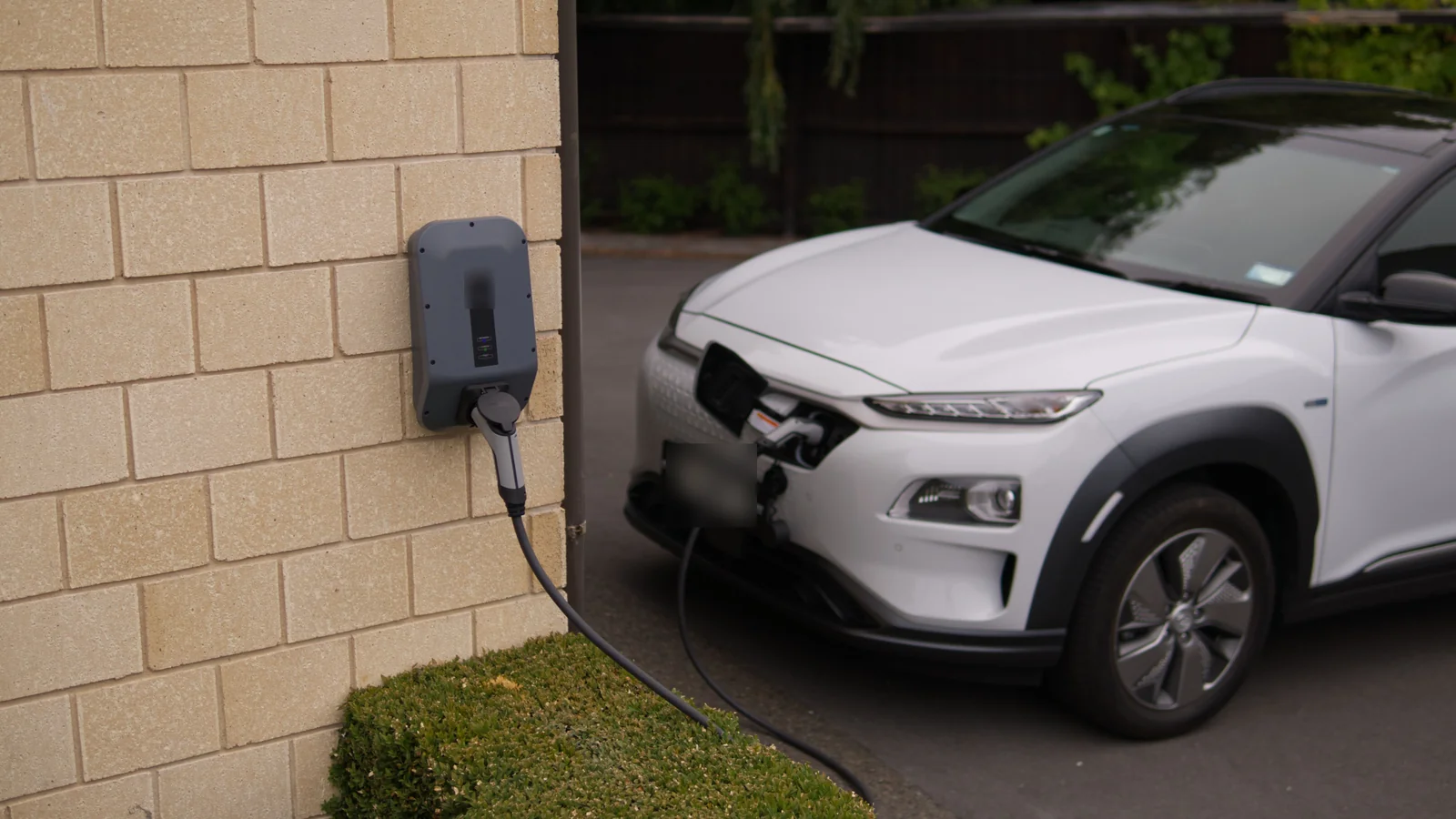
That doesn’t mean fast charging is bad. It’s essential on road trips. The point is that a car charged mostly at home on a Level 2 charger tends to keep more of its capacity over the years than one that relies on high-power public fast chargers every day.
2. Heat
Batteries don’t like high temperatures. Geotab found vehicles in hot climates degrade about 0.4% faster per year than those in mild climates. Over eight years, that difference adds up to a few percent of capacity. Parking in the shade or a garage during hot summers helps.
3. How full or empty you keep the battery
You’ve probably heard you should never charge to 100%. The reality is more nuanced. Geotab found that degradation increased significantly only when vehicles spent more than 80% of their time at very high or very low charge levels (above 80% or below 20%). Occasionally charging to full before a long trip isn’t a problem; leaving the car at 100% or near empty for long stretches is what to avoid.
What the EV Battery Warranty Covers
Battery warranties are one of the strongest protections EV owners have. According to Edmunds, EVs sold in the U.S. are federally required to carry a warranty of 8 years or 100,000 miles, whichever comes first, covering the battery. Some automakers offer longer coverage.
The detail most owners miss is what counts as a failure. Recurrent notes that most modern EV warranties cover both a battery that stops working and one that loses too much capacity, usually below 70% of its original capacity (some automakers use 65% or 75%).
That means a battery that has lost 15% or 20% of its capacity is working as expected and typically won’t be replaced under warranty, even though the car has noticeably less range than when new.
Before you buy, check your warranty booklet for:
- The time and mileage limits
- The capacity threshold for a degradation claim
- Whether coverage transfers to the next owner if you sell the car
- Any state-specific coverage, since some states have additional requirements
What It Costs to Replace an EV Battery
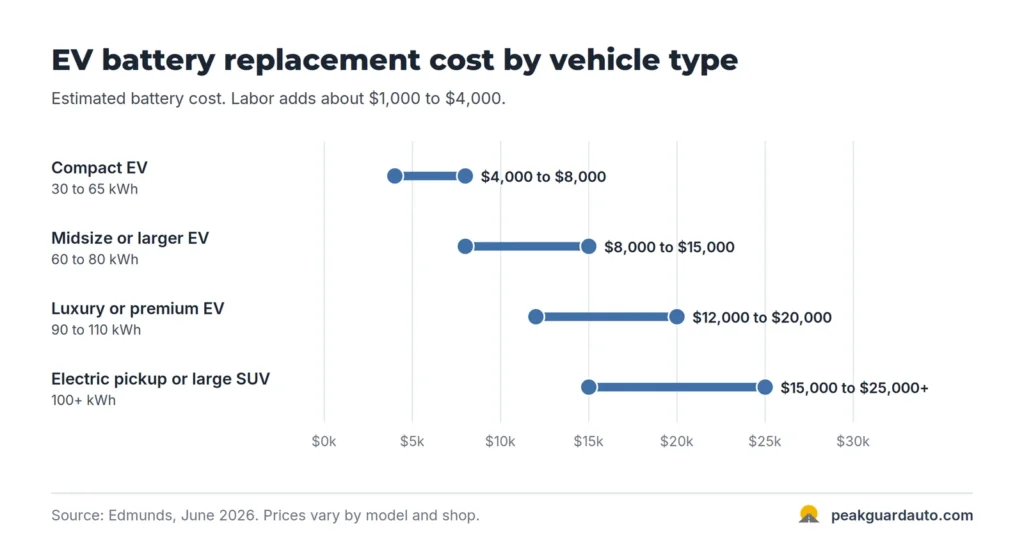
If you do need a new battery outside warranty, the cost depends mostly on battery size. Edmunds’ June 2026 estimates:
| Vehicle type | Battery size | Estimated replacement cost |
|---|---|---|
| Compact EV | 30 to 65 kWh | $4,000 to $8,000 |
| Midsize or larger EV | 60 to 80 kWh | $8,000 to $15,000 |
| Luxury or premium EV | 90 to 110 kWh | $12,000 to $20,000 |
| Electric pickup or large SUV | 100+ kWh | $15,000 to $25,000+ |
Source: Edmunds, June 2026. Labor adds roughly $1,000 to $4,000. Prices vary by model and shop.
A full replacement isn’t always necessary. On some vehicles, a technician can replace individual battery modules, which Edmunds estimates at $1,000 to $5,000 each. However, some newer designs build the battery into the vehicle’s structure, which can make repairs impractical. Refurbished batteries are another option for some models, but they may come with shorter warranties.
How to Make Your EV Battery Last Longer
Based on the data above, these habits help the most:
- Charge at home when you can. Level 2 home charging is gentler on the battery than daily high-power fast charging. If you’re weighing home charging costs, our guide to the real cost of owning a car compares EV and gas running costs.
- Save DC fast charging for road trips rather than everyday use.
- Avoid leaving the battery at extremes for long periods. Many EVs let you set a daily charge limit; around 80% is a common choice for everyday driving.
- Park in the shade or a garage in hot weather when possible.
- Keep the software updated. Automakers sometimes improve battery management through updates.
Buying a Used EV? Check the Battery First
Battery health is the most important thing to check on a used EV. A few practical steps:
- Ask for a battery health report. Some dealers and third-party services can provide one; many EVs also show an estimated full-charge range you can compare with the original rating.
- Check the remaining warranty. Note the in-service date and mileage, and confirm whether the battery warranty transfers to you.
- Compare the range at a full charge with the car’s original EPA range. A modest drop is normal; a large drop on a young car deserves questions.
- Have it inspected by a technician familiar with EVs, as you would with any used car purchase.
What About Hybrids?
Hybrids use smaller batteries that work alongside a gas engine. They follow the same principles: heat and heavy use are the main sources of wear, and automakers provide a dedicated warranty for the hybrid battery. Check your owner’s manual or warranty booklet for the exact coverage on your model, since it varies by automaker. For prices and options, see our guide to hybrid battery replacement cost.
When to See a Technician
Have your EV checked by a dealer or qualified EV technician if you notice:
- A sudden, large drop in range that isn’t explained by cold weather
- Battery or charging warning lights on the dashboard
- The car refusing to charge, or charging much more slowly than usual
- Any swelling, unusual smell, smoke or fluid leak near the battery area (stop driving and contact the manufacturer or emergency services)
Cold weather can temporarily reduce range by a noticeable amount, so a winter dip alone usually isn’t a sign of damage.
Frequently Asked Questions
How many years does an EV battery last?
Based on Geotab’s 2026 data, average degradation is about 2.3% per year, which suggests most batteries keep roughly 76% to 88% of their capacity after eight years. Many will remain usable well beyond that, and replacement within the warranty period is uncommon.
Does fast charging damage EV batteries?
Frequent high-power fast charging speeds up wear. Geotab found cars that mostly used high-power fast chargers lost about 3.0% of capacity per year, compared with 1.5% for cars that rarely fast charged. Using fast chargers on road trips is fine.
What does the EV battery warranty cover?
U.S. EVs carry a battery warranty of at least 8 years or 100,000 miles. Most automakers cover both battery failure and capacity loss below a set threshold, commonly 70% of the original capacity.
How much does it cost to replace an EV battery?
According to Edmunds, replacement typically costs $4,000 to $8,000 for compact EVs and $15,000 to $25,000 or more for electric trucks and large SUVs, plus labor. Some batteries can be repaired by replacing individual modules for less.
Should I charge my EV to 100%?
Occasionally charging to 100% before a long trip is fine. Geotab’s data suggests degradation rises mainly when a car spends most of its time at very high or very low charge levels, so a daily limit around 80% is a sensible habit for many drivers.
Do EV batteries lose range in cold weather?
Yes, but usually temporarily. Cold temperatures reduce how much energy the battery can deliver and add heating demands, so range drops in winter and returns in warmer weather. That’s different from permanent degradation.
Is it worth buying a used EV?
It can be, especially if the battery is healthy and still under warranty. Check the battery health, remaining warranty and full-charge range before buying, and have the car inspected.
Conclusion
EV batteries last much longer than many people fear. Real-world data from more than 22,700 vehicles shows an average loss of about 2.3% a year, replacements are uncommon, and the warranty covers at least 8 years or 100,000 miles. Your charging habits matter most: charge at home when you can, save fast charging for trips and avoid leaving the battery at extremes. If you’re shopping used, make battery health the first thing you check.
PeakGuard Auto provides general informational guidance only. Battery life, warranty terms and replacement costs vary by make, model, year and location. Always check your owner’s manual and warranty booklet, and consult a qualified EV technician or your dealer about your vehicle.
Sources
- Geotab: EV battery health study, April 2026 (22,700+ vehicles). https://www.geotab.com/blog/ev-battery-health/
- Recurrent, via TechNewsWorld (May 2023): EV battery replacement rates from 15,000 vehicles. https://www.technewsworld.com/story/study-finds-ev-battery-replacement-rare-most-covered-by-warranty-178257.html
- Recurrent: EV battery warranty coverage and capacity thresholds. https://www.recurrentauto.com/research/electric-vehicle-warranties-whats-new
- Edmunds (June 2026): EV battery replacement costs and federal warranty requirement. https://www.edmunds.com/electric-car/articles/electric-car-battery-replacement-costs.html