
Quick Answer: A bumper-to-bumper warranty covers almost every part of a new car against factory defects, usually for 3 years or 36,000 miles. A powertrain warranty covers only the parts that make the car move, such as the engine, transmission and drive axles, but lasts longer, usually 5 years or 60,000 miles. Some brands, including Hyundai and Kia, offer 10 years or 100,000 miles of powertrain coverage. Neither covers wear items, maintenance or accident damage.
Key Takeaways
- Bumper-to-bumper is broad but short. It covers most defects, from electronics to air conditioning, for 3 to 5 years at most brands.
- Powertrain is narrow but long. It covers the engine, transmission and drive parts, often for 5 to 10 years.
- Powertrain coverage protects you from the biggest bills. A transmission replacement averages more than $6,000, according to RepairPal data.
- Neither covers wear and tear. Brakes, tires, wipers and routine maintenance are your cost.
- You don’t have to use the dealer. The FTC says independent shops and aftermarket parts don’t void your warranty on their own.
Every new car comes with at least two factory warranties, and the difference between them matters when something breaks. If your touchscreen fails at 40,000 miles, you might be out of luck. If your transmission fails at 55,000 miles, you might be fully covered. This guide explains powertrain vs bumper-to-bumper warranty coverage, compares terms across brands, and shows how to keep your coverage valid.
Table of Contents
What a Bumper-to-Bumper Warranty Covers
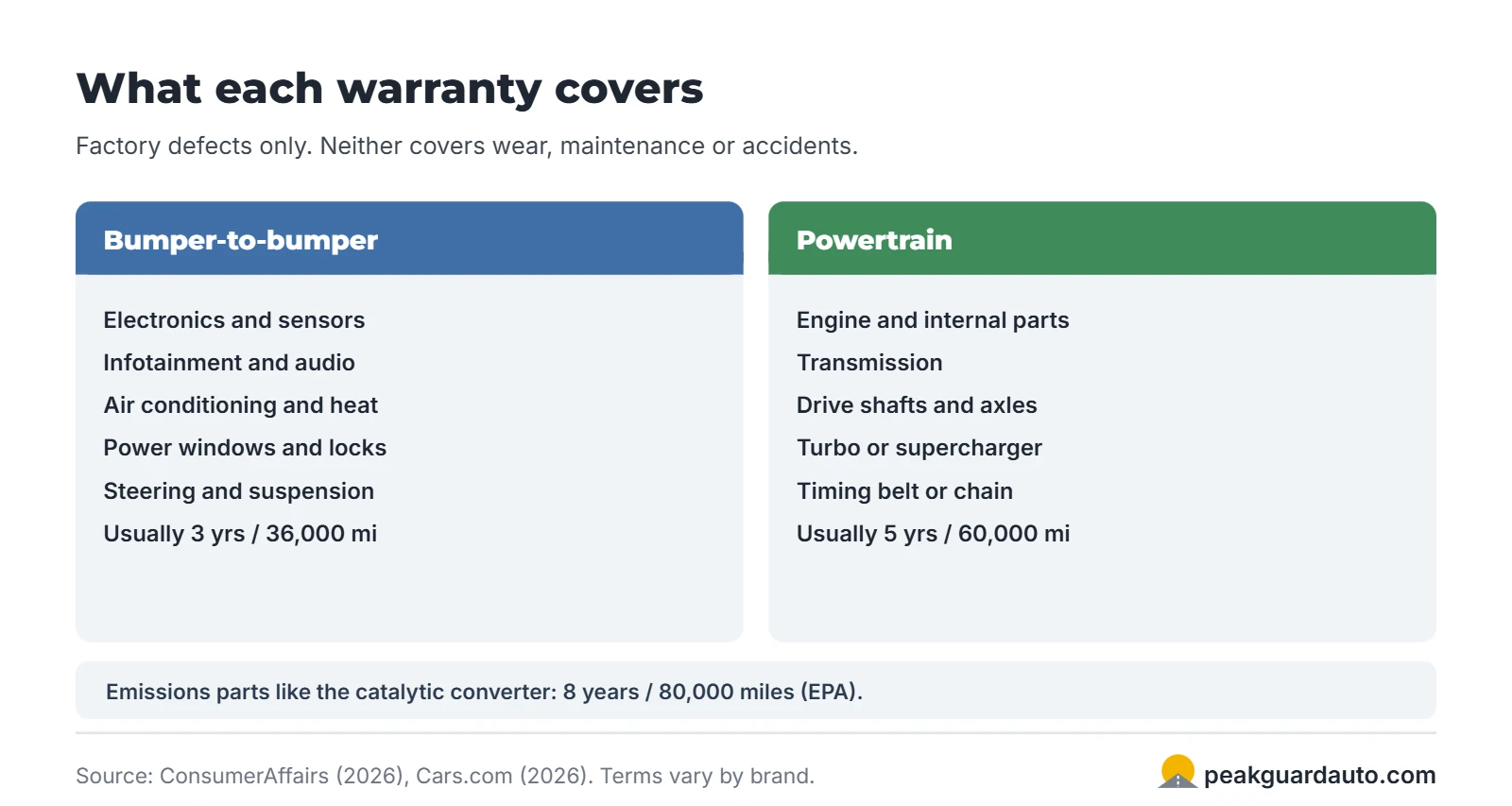
A bumper-to-bumper warranty, also called a basic or new vehicle limited warranty, is the most comprehensive coverage a car comes with. It covers most components that fail because of a manufacturing defect, according to ConsumerAffairs.
That typically includes:
- electrical systems, sensors and wiring
- infotainment screens, audio and navigation
- air conditioning and heating
- power windows, locks and seats
- steering and suspension parts
- safety systems and driver assistance features
The name is a little misleading. It doesn’t literally cover everything between the bumpers. Wear items and damage are excluded, as explained below.
What a Powertrain Warranty Covers
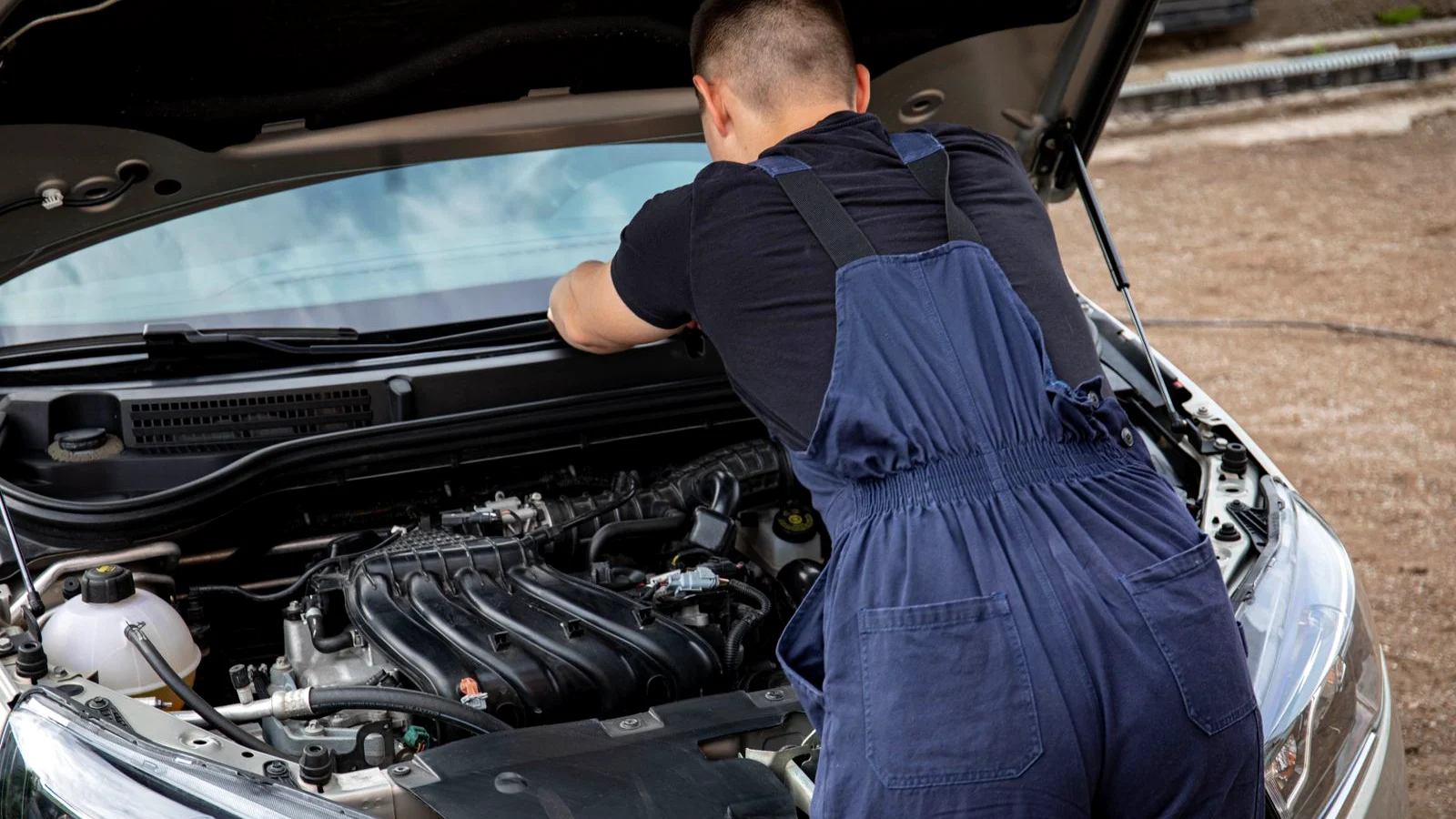
A powertrain warranty covers the parts that produce power and deliver it to the wheels. According to ConsumerAffairs, that typically means:
- the engine and its internal parts
- the transmission
- drive shafts and drive axles
- the powertrain control module
- turbochargers and superchargers
- the timing belt or timing chain
Related sensors and electronics usually fall under the bumper-to-bumper warranty instead. Once the bumper-to-bumper coverage ends, those parts aren’t covered even if the powertrain warranty is still active.
Powertrain vs Bumper-to-Bumper Warranty Terms by Brand
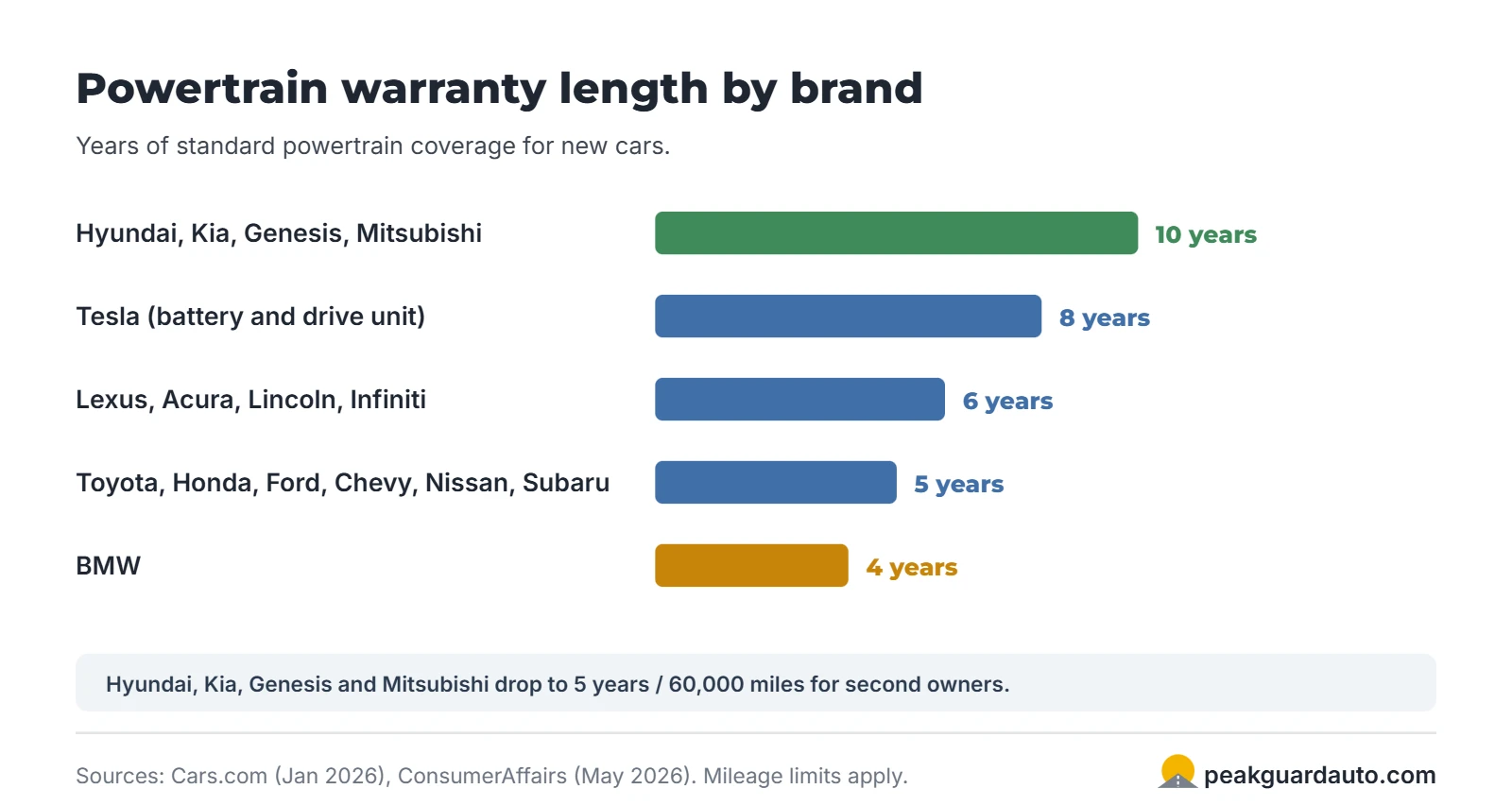
Coverage lasts for a set number of years or miles, whichever comes first. Here are the standard terms for major brands:
| Brand | Bumper-to-bumper | Powertrain |
|---|---|---|
| Toyota | 3 years / 36,000 miles | 5 years / 60,000 miles |
| Honda | 3 years / 36,000 miles | 5 years / 60,000 miles |
| Ford | 3 years / 36,000 miles | 5 years / 60,000 miles |
| Chevrolet | 3 years / 36,000 miles | 5 years / 60,000 miles |
| Nissan | 3 years / 36,000 miles | 5 years / 60,000 miles |
| Subaru | 3 years / 36,000 miles | 5 years / 60,000 miles |
| Hyundai | 5 years / 60,000 miles | 10 years / 100,000 miles |
| Kia | 5 years / 60,000 miles | 10 years / 100,000 miles |
| Genesis | 5 years / 60,000 miles | 10 years / 100,000 miles |
| Mitsubishi | 5 years / 60,000 miles | 10 years / 100,000 miles |
| Lexus | 4 years / 50,000 miles | 6 years / 70,000 miles |
| Acura | 4 years / 50,000 miles | 6 years / 70,000 miles |
| Lincoln | 4 years / 50,000 miles | 6 years / 70,000 miles |
| Infiniti | 4 years / 60,000 miles | 6 years / 70,000 miles |
| BMW | 4 years / 50,000 miles | 4 years / 50,000 miles |
| Tesla | 4 years / 50,000 miles | 8 years on battery and drive unit (miles vary by model) |
Sources: Cars.com (January 2026) and ConsumerAffairs (May 2026). Terms can change by model year, so confirm with the manufacturer for your exact vehicle.
Hybrids and electric vehicles also have separate battery warranties. Learn more in our guide to hybrid battery replacement cost.
Why Powertrain Coverage Matters So Much
Powertrain repairs are some of the most expensive a car can need. Here’s what common major repairs cost, based on RepairPal data reported by ConsumerAffairs in October 2026:
| Repair | Average cost |
|---|---|
| Transmission replacement | $6,238 to $6,764 |
| Cylinder head replacement | $4,241 to $5,101 |
| Head gasket replacement | $2,572 to $3,386 |
| Turbocharger replacement | $2,631 to $3,261 |
| Catalytic converter replacement | $2,280 to $2,480 |
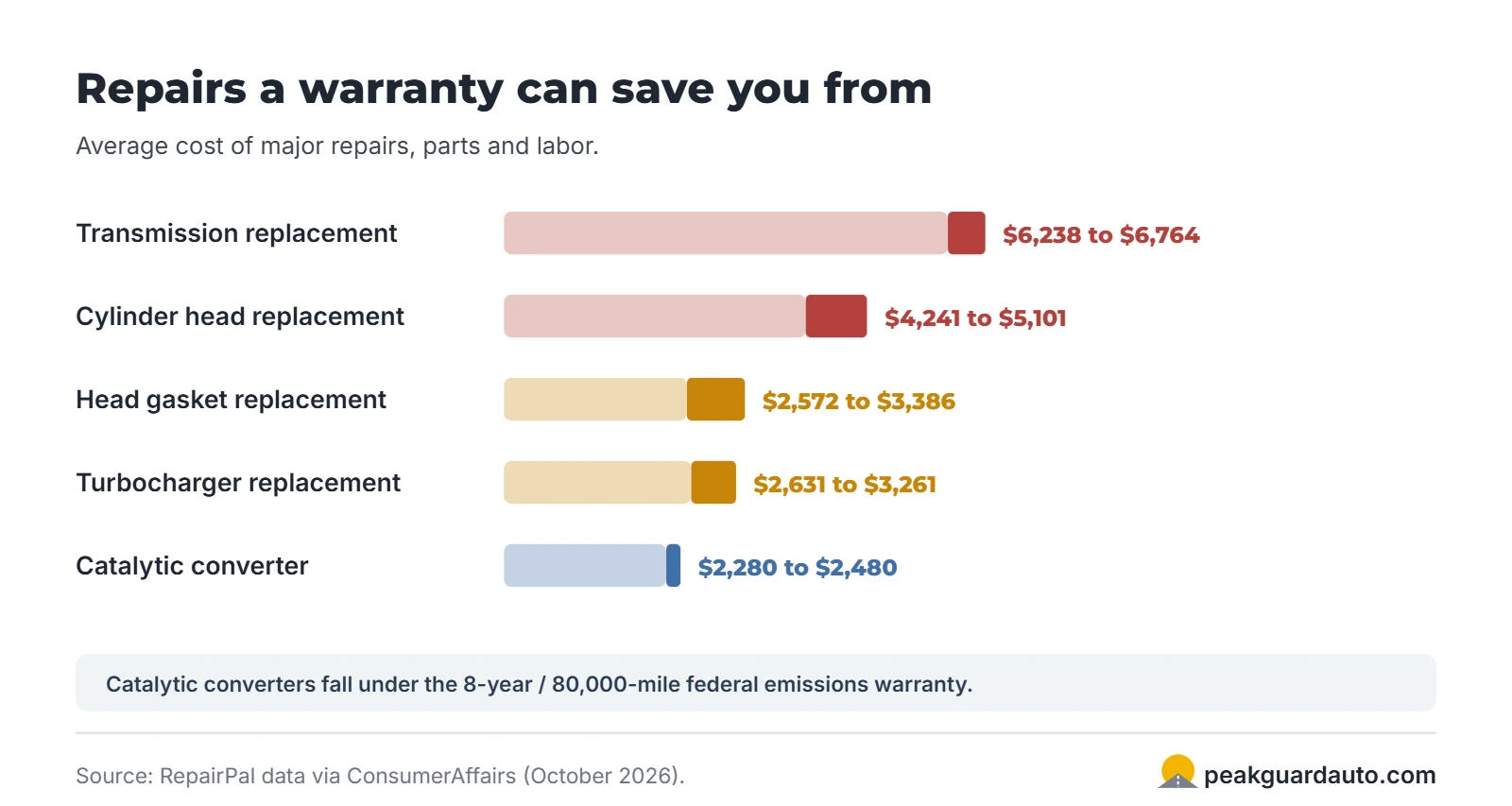
In the powertrain vs bumper-to-bumper warranty comparison, this is where powertrain coverage earns its keep. A single covered powertrain failure can be worth more than an entire year of car ownership costs. That’s why a long powertrain warranty is a real advantage when you compare cars, and why it matters whether coverage transfers when you buy used.
The Warranty Most People Forget: Emissions
Federal law adds another layer of protection. According to the EPA, emission-related parts are covered against defects for 2 years or 24,000 miles. Three major parts are covered for 8 years or 80,000 miles:
- the catalytic converter
- the electronic emissions control unit (the engine computer)
- the onboard diagnostic device
With a catalytic converter replacement averaging over $2,000, this coverage can matter long after your bumper-to-bumper warranty ends. If your check engine light comes on with an emissions code on a car under 8 years and 80,000 miles, ask the dealer whether it’s covered. Our guide to what a check engine light means explains the first steps.
What Neither Warranty Covers
Factory warranties cover defects, not everything that can go wrong. According to ConsumerAffairs, typical exclusions include:
- Wear items: brake pads, rotors, tires, wiper blades, filters and bulbs
- Routine maintenance: oil changes, fluid changes and alignments
- Damage from neglect or abuse: including skipping required maintenance
- Accidents and weather damage: these are insurance claims
- Damage caused by aftermarket parts
Some brands cover certain maintenance items for a short time, so check your warranty booklet.
Does the Warranty Transfer When You Sell?
Most factory warranties transfer to the next owner for free because they’re tied to the vehicle identification number, according to Autotrader. The coverage clock starts on the date the car was first sold, not its model year, so a used car may have less time left than you expect.
The big exception: Hyundai, Kia, Genesis and Mitsubishi reduce their 10-year, 100,000-mile powertrain warranty to 5 years or 60,000 miles for second owners. Certified pre-owned cars from these brands keep the longer coverage. If you’re buying used, check the in-service date and remaining coverage before you buy. Our used car buying checklist includes this step.
How to Keep Your Warranty Valid
You have more freedom than many dealers suggest. The Federal Trade Commission says:
- You don’t have to use the dealer for maintenance. Manufacturers can’t deny coverage just because an independent shop or you did the work.
- Aftermarket or recycled parts don’t void your warranty on their own. The manufacturer can deny a claim only if it shows the part or work caused the damage.
- Keep every record. Save receipts and a log of all maintenance, no matter who does it. Missing records can lead to a denied claim.
Follow the maintenance schedule in your owner’s manual, especially oil changes, since engine damage from skipped maintenance isn’t covered.
What Happens When Your Factory Warranty Ends?
Once your coverage expires, you pay for repairs yourself or buy an extended warranty, which is really a service contract. Whether that’s worth it depends on the car, the price and the contract terms. Compare the options in our guides to factory vs extended warranties and whether an extended warranty is worth it.
Frequently Asked Questions
What is the difference between powertrain and bumper-to-bumper warranty?
A bumper-to-bumper warranty covers most parts of the car against factory defects, but for a shorter time, usually 3 years or 36,000 miles. A powertrain warranty covers only the engine, transmission and drive parts, but lasts longer, usually 5 years or 60,000 miles, and up to 10 years or 100,000 miles at some brands.
What does a powertrain warranty not cover?
It doesn’t cover electronics, air conditioning, infotainment, suspension, wear items like brakes and tires, routine maintenance, accident damage, or damage caused by neglect. Sensors connected to the engine are often covered only by the bumper-to-bumper warranty.
Which car brand has the best warranty?
Hyundai, Kia, Genesis and Mitsubishi offer some of the longest standard coverage: 5 years or 60,000 miles bumper-to-bumper and 10 years or 100,000 miles powertrain. The powertrain coverage drops to 5 years or 60,000 miles for second owners.
Does a powertrain warranty transfer to a new owner?
Usually, yes. Most factory warranties stay with the car. The main exception is Hyundai, Kia, Genesis and Mitsubishi, whose 10-year powertrain coverage is reduced to 5 years or 60,000 miles for second owners unless the car is certified pre-owned.
Will using an independent mechanic void my warranty?
No. The FTC says manufacturers can’t void your warranty or deny coverage just because someone other than the dealer did the work. Keep receipts for all maintenance in case you need to make a claim.
Is bumper-to-bumper warranty worth it?
You don’t pay for it separately on a new car; it comes standard. If you’re offered an extended bumper-to-bumper plan, weigh the price against what it covers and how long you’ll keep the car. Our guide on whether an extended warranty is worth it walks through the math.
Conclusion
In the powertrain vs bumper-to-bumper warranty question, the answer is that you need to know both. The bumper-to-bumper warranty protects you from almost any factory defect in the first few years. The powertrain warranty protects you from the most expensive failures for longer. Know both end dates for your car, keep your maintenance records, and remember that emissions parts have their own 8-year coverage. If you’re comparing new cars, a longer warranty is worth real money.
Warranty terms change. Always confirm coverage in your vehicle’s warranty booklet or with the manufacturer.
Sources
- Cars.com (January 12, 2026): warranty coverage by brand. https://www.cars.com/articles/which-vehicles-have-the-best-warranty-coverage-447236/
- ConsumerAffairs (May 21, 2026): what bumper-to-bumper and powertrain warranties cover, exclusions and brand terms. https://www.consumeraffairs.com/automotive/best-new-car-warranty.html
- ConsumerAffairs, citing RepairPal (October 9, 2026): costs of expensive car repairs. https://www.consumeraffairs.com/automotive/most-expensive-car-repairs.html
- Autotrader (September 1, 2026): transferring factory warranties. https://www.autotrader.com/car-shopping/buying-car-factory-warranty-transferable
- Federal Trade Commission Consumer Alert (July 2011): auto warranties, routine maintenance and repairs. https://www.govinfo.gov/content/pkg/GOVPUB-FT-PURL-gpo18134/pdf/GOVPUB-FT-PURL-gpo18134.pdf
- U.S. EPA: federal emissions warranty fact sheet. https://19january2021snapshot.epa.gov/sites/static/files/2013-08/documents/420f09048.pdf