
Quick Answer: The cost to charge an EV at home is about $60 to $70 a month for most electric cars driven an average 1,145 miles a month, at the 2026 U.S. average electricity rate of 18.16 cents per kWh. A large electric truck costs about $115. That’s roughly 60% less than fueling a 30 mpg gas car at $3.98 a gallon. Your real cost depends mostly on your state’s electricity rate.
Key Takeaways
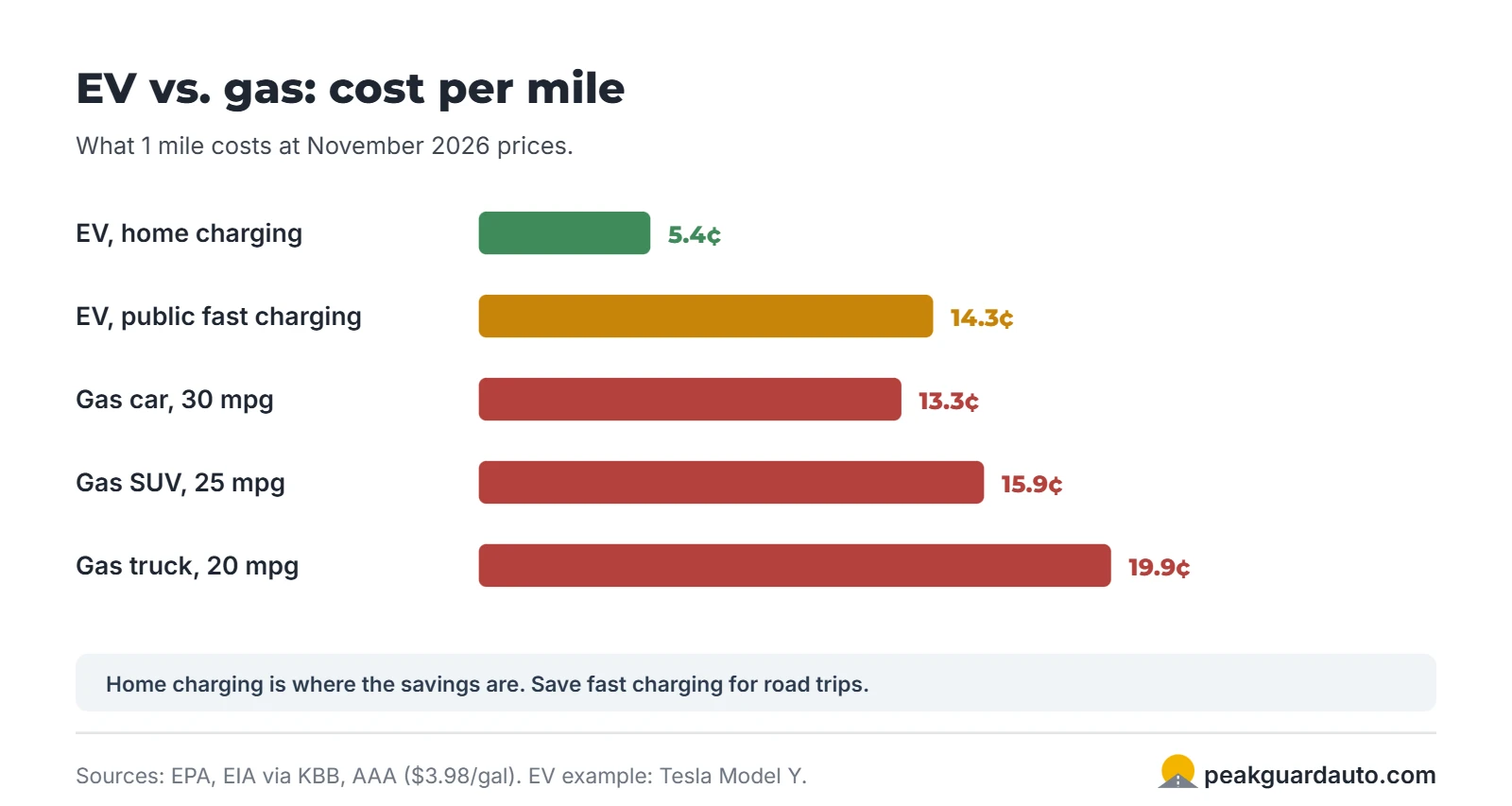
- Most EVs cost about 5 to 6 cents a mile to charge at home, versus about 13 cents a mile for a 30 mpg gas car.
- Your state matters more than your car. The same Tesla Model Y costs about $44 a month to charge in Nevada and $161 in Hawaii.
- Home charging is about one third the price of fast charging on the road.
- A Level 2 charger is about speed, not savings. Installation typically costs $800 to $3,000 on top of the charger, and the federal tax credit ended on June 30, 2026.
- A regular wall outlet is enough for many drivers. It adds about 5 miles of range an hour, which covers the average 38 mile day overnight.
If you’re thinking about an electric car, or you just bought one, the big question is what it will add to your electric bill. The answer is usually less than you’d spend on gas, but the gap depends on where you live, what you drive and how you charge. This guide shows the simple math, real monthly costs for popular EVs, and whether a home charger is worth it.
Table of Contents
How to Calculate Your Home Charging Cost
You need three numbers: how far you drive, how efficient your EV is, and what you pay for electricity.
Monthly cost = miles per month × kWh per 100 miles ÷ 100 × 1.15 × your price per kWh
Here’s what each part means:
- Miles per month. The average licensed driver covers 13,735 miles a year, according to the Federal Highway Administration. That’s about 1,145 miles a month.
- kWh per 100 miles. This is your EV’s efficiency, listed on its window sticker and on fueleconomy.gov. Lower is better. A Tesla Model 3 uses 25 kWh per 100 miles; a Ford F-150 Lightning uses 48.
- The 1.15. Some electricity is lost as heat while charging. Losses average about 15%, so you buy about 15% more electricity than ends up in the battery.
- Price per kWh. Find it on your electric bill. The U.S. average was 18.16 cents in August 2026, according to EIA data reported by Kelley Blue Book.
Example: A Tesla Model Y uses 26 kWh per 100 miles. 1,145 × 26 ÷ 100 × 1.15 = about 342 kWh a month. At 18.16 cents, that’s about $62 a month.
Cost to Charge Popular EVs at Home
At the national average rate, 1,145 miles a month, and a 15% charging loss:
| EV | Efficiency (kWh/100 mi) | Electricity per month | Cost per month | Cost per year | Cost per mile |
|---|---|---|---|---|---|
| Tesla Model 3 | 25 | 329 kWh | $60 | $717 | 5.2¢ |
| Tesla Model Y | 26 | 342 kWh | $62 | $746 | 5.4¢ |
| Nissan Leaf | 28 | 369 kWh | $67 | $803 | 5.8¢ |
| Hyundai Ioniq 5 | 29 | 382 kWh | $69 | $832 | 6.1¢ |
| Ford F-150 Lightning | 48 | 632 kWh | $115 | $1,377 | 10.0¢ |
Efficiency figures are EPA ratings. Your real numbers will be higher in cold weather and at highway speeds.
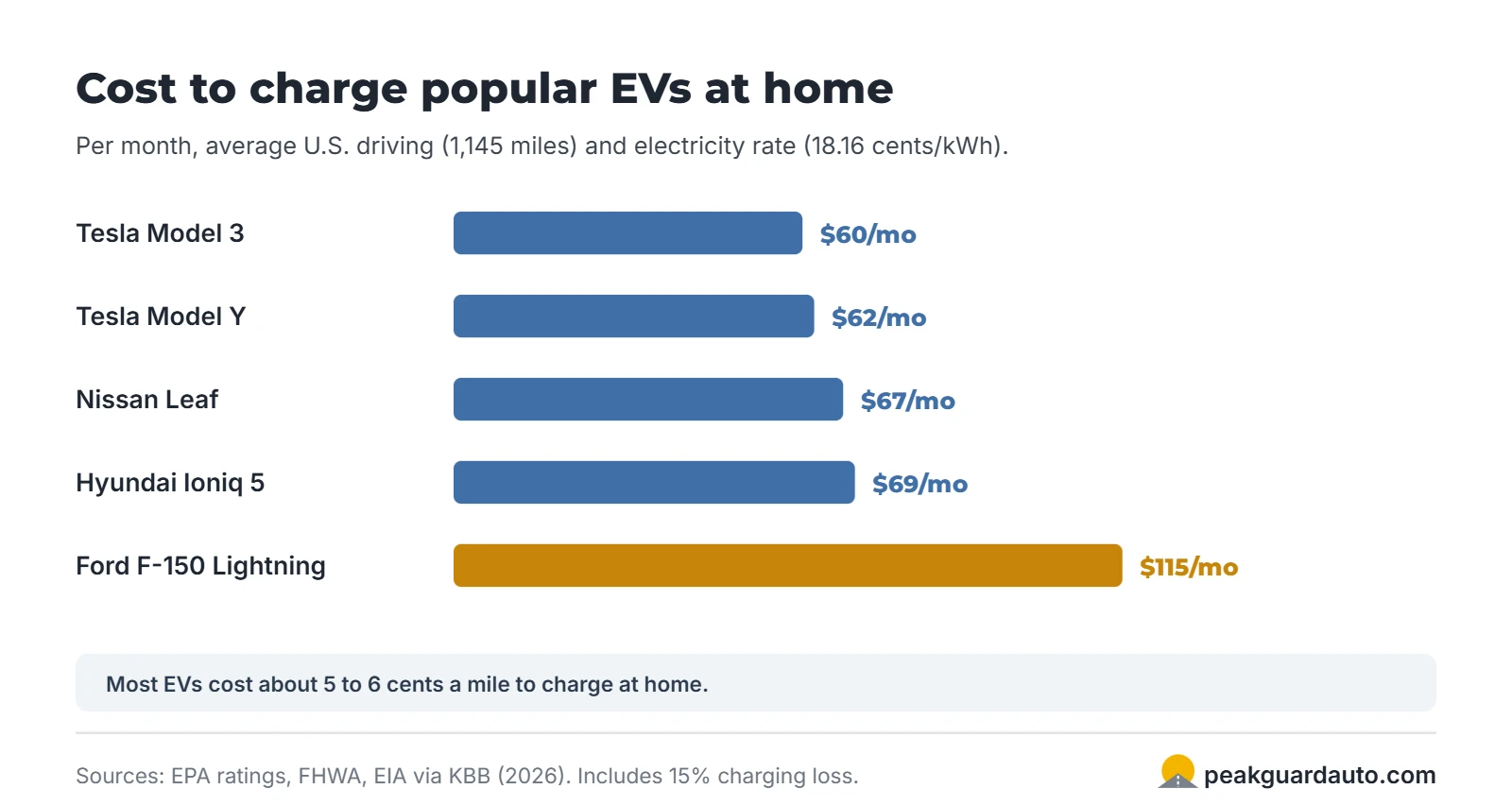
What this means for your electric bill: a typical EV adds about 330 to 380 kWh a month. If you drive less than average, scale it down. At 600 miles a month, a Model Y adds only about $33.
How Your State Changes the Cost
Electricity prices vary hugely by state, so the cost to charge an EV at home can be far above or below the national average. Here’s what the same Tesla Model Y costs to charge each month, using August 2026 rates:
| State | Rate per kWh | Model Y per month |
|---|---|---|
| Nevada (cheapest) | 12.72¢ | $44 |
| South Dakota | 15.15¢ | $52 |
| U.S. average | 18.16¢ | $62 |
| Massachusetts | 30.48¢ | $104 |
| Hawaii (most expensive) | 47.18¢ | $161 |
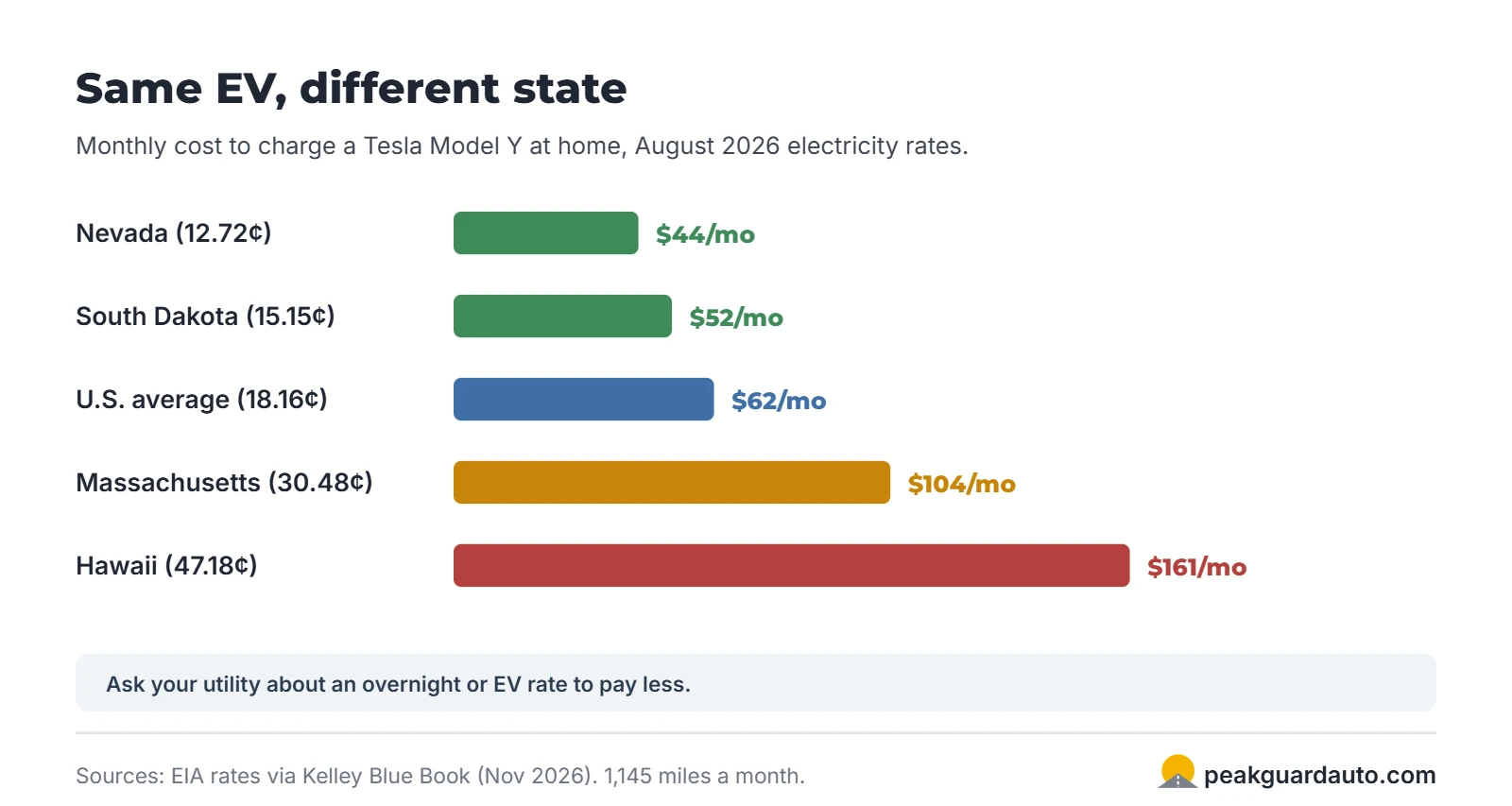
Rates are also climbing. The U.S. Energy Information Administration expects average residential prices to keep rising in 2026, so check your latest bill rather than relying on last year’s number.
Ask your utility about a time-of-use or EV rate. Many utilities charge less for electricity used overnight, according to the Department of Energy. Since most EVs charge while you sleep, switching plans can cut your cost noticeably. Most EVs and chargers let you schedule charging to start when cheap hours begin.
Home Charging vs. Gas: How Much Do You Save?
At the AAA national average of $3.98 a gallon in November 2026, here’s what the same 1,145 miles a month costs in a gas vehicle:
| Vehicle | Fuel per month | Cost per month | Cost per year | Cost per mile |
|---|---|---|---|---|
| Gas car, 30 mpg | 38 gallons | $152 | $1,822 | 13.3¢ |
| Gas SUV, 25 mpg | 46 gallons | $182 | $2,187 | 15.9¢ |
| Gas truck, 20 mpg | 57 gallons | $228 | $2,733 | 19.9¢ |
The savings:
- A Tesla Model Y charged at home costs about $1,076 a year less than a 30 mpg gas car.
- An F-150 Lightning costs about $1,356 a year less than a 20 mpg gas truck.
These savings shrink if you live in a high-rate state like Hawaii or Massachusetts, or rely on public fast charging. They grow if you’re on a cheap overnight rate. For the full picture, including insurance, depreciation and repairs, see our guide to the true cost to own a car.
Home Charging vs. Public Fast Charging
Charging at home is the cheapest way to run an EV. Public DC fast chargers cost far more. Kelley Blue Book uses 50 cents per kWh as an example fast charging price, and many stations charge more.
At 50 cents per kWh, charging a Model Y entirely at fast chargers would cost about $164 a month, more than fueling a 30 mpg gas car. That’s why the low cost to charge an EV at home is where the savings come from. Fast chargers are best kept for road trips.
Level 1 vs. Level 2: Do You Need a Home Charger?
There are two ways to charge at home.
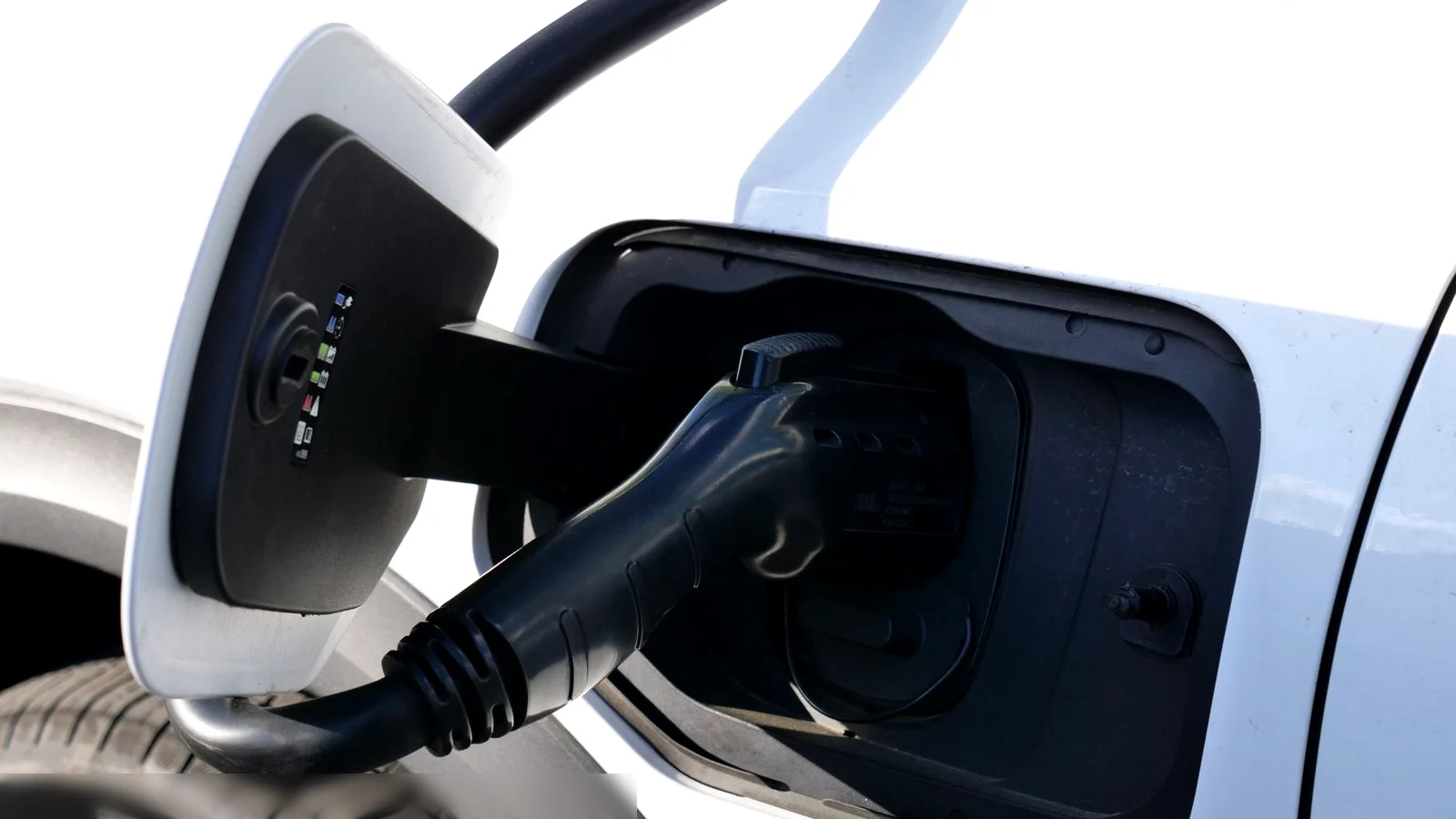
Level 1 uses a regular 120 volt household outlet and the cord that comes with most EVs. It’s slow, adding about 5 miles of range per hour, according to fueleconomy.gov. But the average American drives about 38 miles a day, which takes about 7 to 8 hours to replace. Plug in overnight and many drivers never need anything more. The Department of Energy notes that many EV owners meet their daily needs this way.
Level 2 uses a 240 volt circuit, like a clothes dryer. It adds about 25 miles of range per hour on average, and up to about 40 for some cars. It makes sense if you:
- drive more than about 50 miles a day
- have a large battery, like an electric truck, that takes days to fill on Level 1
- can’t plug in for long overnight
- live where cold weather slows charging and cuts range
Level 2 won’t meaningfully lower your bill. It wastes less electricity: in one European test by ADAC, a car lost about 24% charging from a household socket and about 10% from a wall box. For a Model Y driven an average distance, that difference is worth roughly $137 a year by our estimate. A typical installation would take around 20 years to pay for itself on electricity savings alone. Buy Level 2 for speed and convenience, not to save money.
How Much Does a Level 2 Charger Cost to Install?
According to EnergySage’s 2026 data:
| Cost | Typical range |
|---|---|
| Charger (hardware) | $300 to $600 |
| Installation by an electrician | $800 to $3,000 (2026 average $2,442) |
| New circuit, if your panel has space | $60 to $150 |
| Subpanel, if your panel is full | $500 to $1,500 |
| Main electrical service upgrade | $1,500 to $4,000+ |
Costs depend most on the distance from your electrical panel to where you park, and whether your panel can handle another 240 volt circuit. Get at least two written quotes from licensed electricians, and ask whether a permit is included. The Department of Energy notes that many areas require one.
The federal tax credit is gone. The 30C credit, which covered 30% of a home charger up to $1,000, ended for installations completed after June 30, 2026, according to Kiplinger. Check your utility and state for rebates, which some still offer.
How to Lower Your Home Charging Cost
- Switch to a time-of-use or EV rate if your utility offers one, and schedule charging for overnight hours.
- Charge to 80% for daily driving unless you need the full range. Many automakers recommend it for battery health. Learn more in our guide on how long EV batteries last.
- Precondition while plugged in. Warming or cooling the cabin from the wall uses grid power instead of your battery.
- Keep tires properly inflated. Low tires increase energy use.
- Save fast charging for road trips, where it costs about three times home charging.
Frequently Asked Questions
How much does it cost to charge an electric car at home?
The cost to charge an EV at home is about $60 to $70 a month for most EVs driven an average 1,145 miles a month at the 2026 U.S. average electricity rate of 18.16 cents per kWh. Large electric trucks cost about $115. Your exact cost depends on your local electricity rate and how much you drive.
How much will my electric bill go up with an EV?
A typical EV adds about 330 to 380 kWh a month for average driving, including charging losses. At the national average rate, that’s about $60 to $70. If you drive half as much, expect about half the increase.
Is it cheaper to charge an EV at home or at a charging station?
Home is much cheaper. Public DC fast charging often costs 50 cents per kWh or more, about three times the average home rate. Charging a Model Y only at fast chargers would cost about $164 a month, versus about $62 at home.
Can I charge my EV with a regular outlet?
Yes. A standard 120 volt outlet adds about 5 miles of range per hour. Overnight, that replaces the 38 miles the average driver covers in a day. Use a dedicated outlet in good condition and avoid ordinary extension cords.
Is a Level 2 charger worth it?
It’s worth it for speed if you drive a lot, have a large battery or can’t plug in for long. It isn’t worth it for savings alone: it wastes less electricity than Level 1, but that saves only about $137 a year in our estimate, while installation often costs $1,100 to $3,600 in total.
Is there still a tax credit for home EV chargers?
Not at the federal level. The 30C credit ended for installations completed after June 30, 2026. Some states and utilities still offer rebates, so check with your electric company before you buy.
Conclusion
For most drivers, the cost to charge an EV at home is around $60 to $70 a month, about 5 to 6 cents a mile, compared with about 13 cents a mile for a 30 mpg gas car. Use the formula above with your own electric bill to get your real number, ask your utility about an overnight rate, and keep public fast charging for trips. If you’re still deciding between electric and gas, our guide to hybrid vs. electric cars can help.
Prices and rates change. Figures are current as of November 2026 and are estimates based on average driving.
Sources
- Kelley Blue Book (November 2, 2026): average residential electricity rate and state rates; fast charging example. https://www.kbb.com/car-news/how-much-does-it-cost-to-charge-an-ev/
- U.S. Energy Information Administration, Short-Term Energy Outlook (September 2026): residential electricity price forecast. https://www.eia.gov/outlooks/steo/tables/pdf/SF02.pdf
- AAA national gas average, as reported November 10, 2026. https://www.wowt.com/2026/11/10/average-price-gas-falls-below-4-gallon-across-us/
- Federal Highway Administration, Our Nation’s Highways 2026: average miles per licensed driver. https://www.fhwa.dot.gov/policyinformation/pubs/our_nations_highways_2026/drivers.cfm
- Recurrent (March 2026): EPA efficiency ratings for popular EVs. https://www.recurrentauto.com/research/most-efficient-ev
- fueleconomy.gov: F-150 Lightning efficiency. https://www.fueleconomy.gov/FEG/noframes/47818.shtml
- fueleconomy.gov: charging speeds by level. https://fueleconomy.gov/feg/charging.shtml
- InsideEVs (March 2024): charging losses, including ADAC test results. https://insideevs.com/features/711659/ev-charger-efficiency-losses/
- EnergySage (June 2026): Level 2 charger and installation costs. https://www.energysage.com/electric-vehicles/how-much-does-ev-charger-installation-cost-/
- Kiplinger (May 2026): 30C charger tax credit expiration. https://www.kiplinger.com/taxes/tax-credits/ev-charger-tax-credit-deadline
- U.S. Department of Energy, Alternative Fuels Data Center: home charging, time-of-use rates and permits. https://www.afdc.energy.gov/fuels/electricity-charging-home