
Quick Answer: To clean car seats, vacuum first, then clean one small section at a time. For cloth seats, use a little dish soap and water or an upholstery cleaner, scrub gently with a soft brush and wipe with a microfiber towel. For leather, use a mild soap and water or saddle soap, then apply a leather conditioner. Never soak the seats, and avoid bleach, hydrogen peroxide and ammonia, which Consumer Reports says can damage upholstery.
Key Takeaways
- Always vacuum first. Scrubbing a dirty seat grinds grit into the fabric.
- Use less liquid than you think. Damp cushions can grow mold and smell musty, according to Consumer Reports.
- Skip harsh chemicals. Bleach, hydrogen peroxide and ammonia-based cleaners can damage car upholstery.
- Treat perforated leather differently. Put the cleaner on the brush, not the seat, so liquid doesn’t get into the holes.
- Doing it yourself costs about $30 to $80 in supplies, versus about $50 to $180 for a professional interior detail.
Car seats take a beating from coffee, food, mud, sweat and pets. Cleaning them is easy, but the wrong product or too much water can leave stains, shrink leather or create a musty smell that’s harder to fix than the original mess. This guide shows how to clean car seats of every type, how to handle stains and odors, and which products to keep away from your interior.
Table of Contents
Before You Start
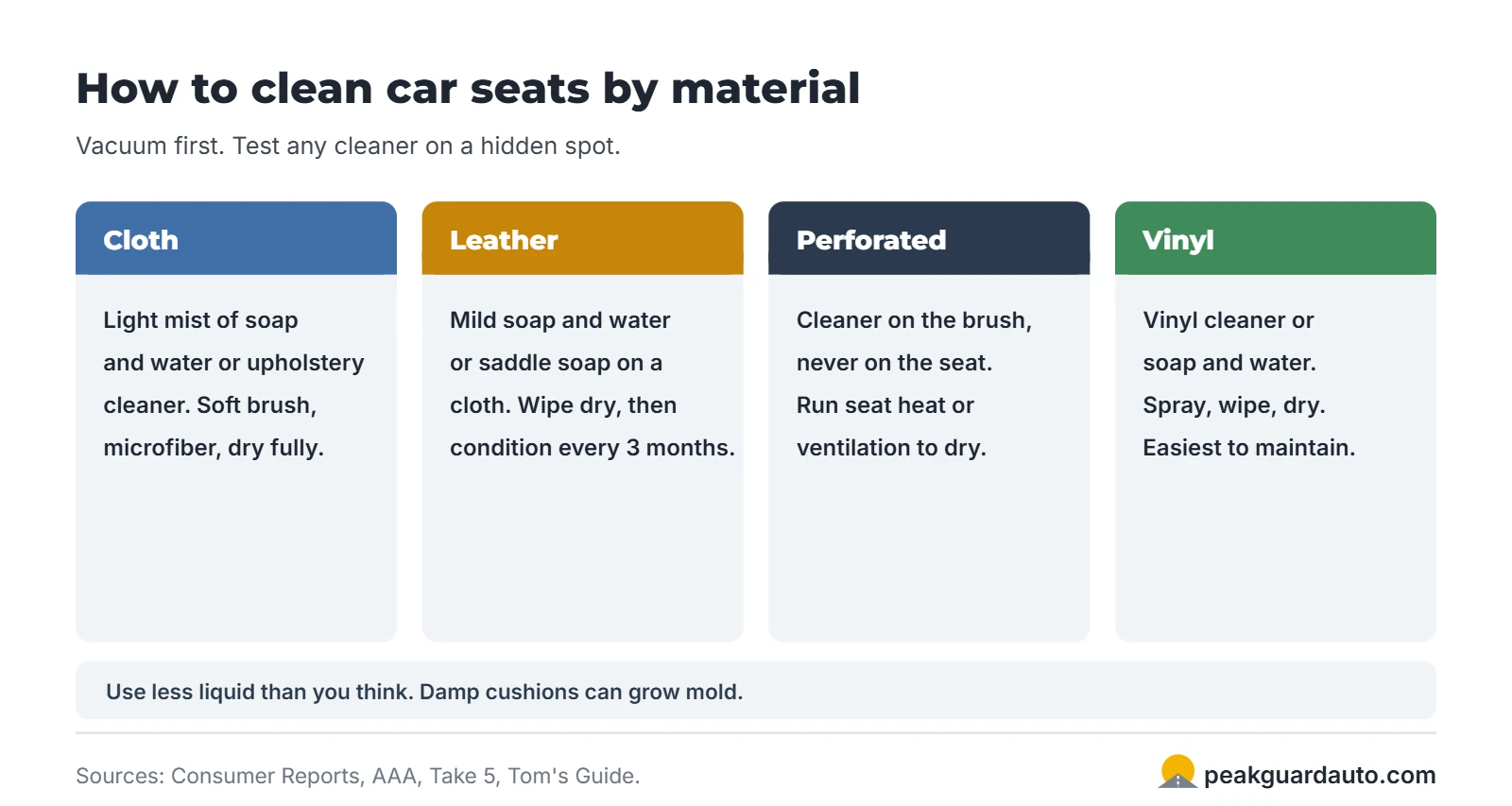
Check your owner’s manual. Some automakers recommend specific cleaners for their upholstery, especially for synthetic leather and seats with heating or cooling.
Identify your seat material. Look for a fabric texture (cloth), a smooth surface with visible grain (leather), small holes (perforated leather) or a plastic-like feel (vinyl). Many cars use synthetic leather, which usually cleans like vinyl.
Test first. Try any cleaner on a small, hidden spot, such as the side or back of a seat, before using it on the whole seat, as AAA recommends.
What you’ll need:
- a vacuum with a brush and crevice tool
- a soft-bristle upholstery brush
- several white or light-colored microfiber towels
- a spray bottle
- dish soap, or a cleaner made for your seat type
- leather conditioner, if you have leather seats
How to Clean Cloth Car Seats
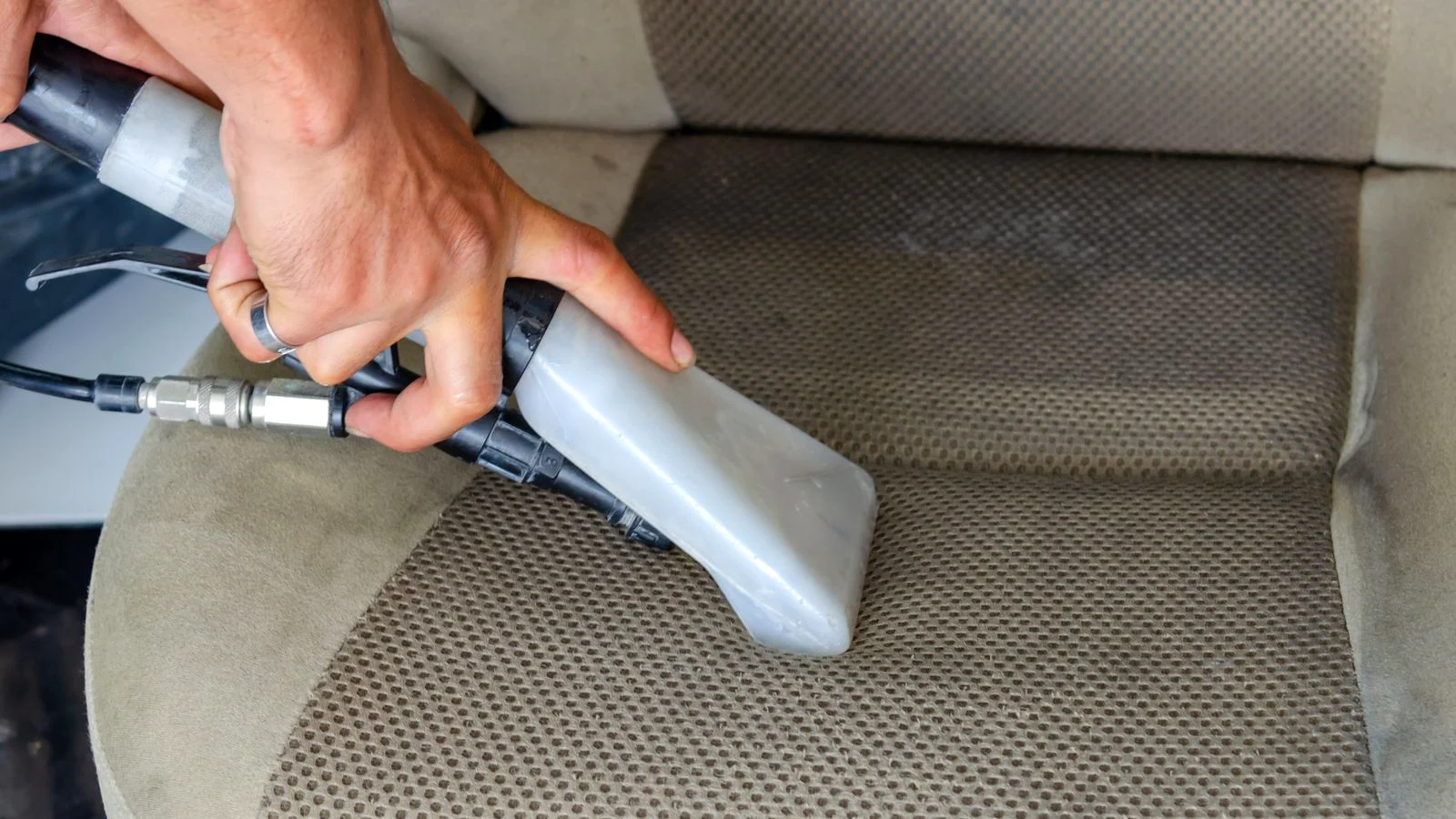
- Vacuum thoroughly. Use the brush attachment on the seat surface and the crevice tool along the seams. If there’s dried mud, let it dry fully and brush it off before vacuuming.
- Mix a gentle cleaner. Use an upholstery cleaner, or make your own. Take 5 suggests 2 cups of water, 1 cup of white vinegar and 1 tablespoon of dish soap in a spray bottle. A few drops of dish soap in warm water also works.
- Work in small sections. Lightly mist one area at a time. Don’t soak it. Too much liquid seeps into the foam underneath.
- Scrub gently. Use a soft brush in small circles to lift the dirt, without pressing hard enough to fray the fabric.
- Wipe with a microfiber towel. Blot up the moisture and dirt. Use light-colored towels so dye can’t transfer.
- Vacuum again once dry. This picks up any residue you loosened.
- Dry completely. Leave the windows or doors open, park in the sun or run a fan. Give the seats at least an hour before sitting on them, longer in cold weather.
How to Clean Leather Car Seats
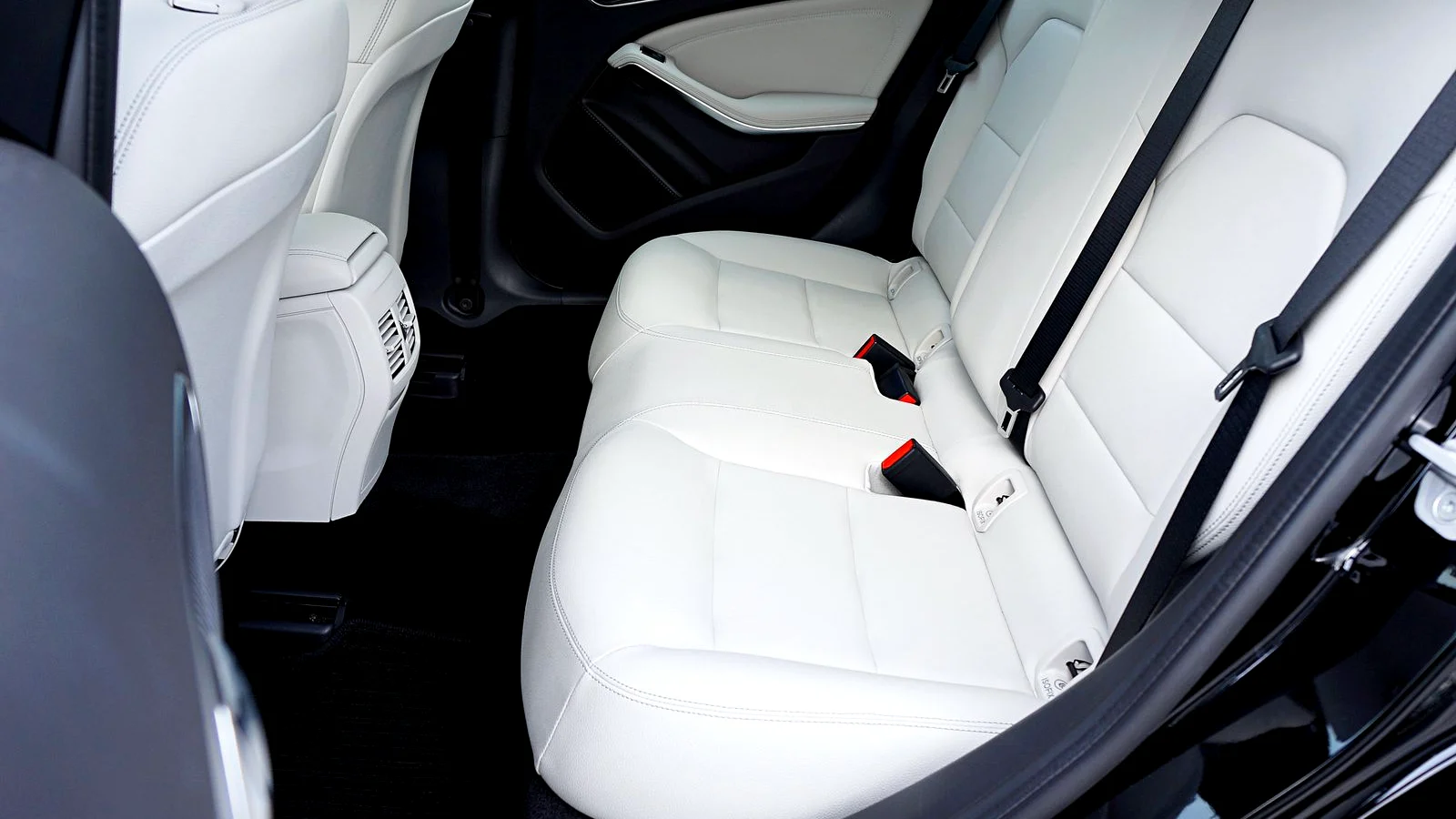
- Vacuum gently. Use a soft brush attachment to avoid scratching. Compressed air helps clear crumbs from seams and crevices.
- Use a mild cleaner. Consumer Reports suggests a soft cloth with a small amount of dish soap and water, or saddle soap. A dedicated leather cleaner also works. Follow the product directions closely.
- Wipe, don’t soak. Dampen the cloth, not the seat. Clean one panel at a time and wipe away the soap with a second damp cloth.
- Dry with a clean towel. Don’t leave moisture sitting on the surface.
- Condition the leather. Consumer Reports recommends an automotive leather conditioner to keep the leather from drying out and cracking. Tom’s Guide suggests conditioning about once every three months.
Perforated (heated or cooled) leather seats: Apply the cleaner to your brush or cloth, never directly to the seat, as AAA advises. Liquid can get trapped in the holes. Running the seat heater or ventilation afterward helps it dry.
How to Clean Vinyl and Synthetic Leather Seats
Vinyl is the easiest material to maintain. It resists stains better than cloth or leather, according to Take 5. Spray a vinyl cleaner or mild soap and water onto the seat, wipe it with a cloth, and dry it with a clean towel.
How to Remove Common Stains and Odors
- Fresh spills: Blot right away with a dry towel. Don’t rub, which spreads the stain deeper into the fabric.
- Set-in stains on cloth: Make a paste of 2 to 3 parts baking soda to 1 part water, as Tom’s Guide suggests. Apply, let it sit a few minutes, then scrub gently with a soft brush and wipe clean.
- Grease and oil: Sprinkle baking soda on the spot and let it absorb the oil for a few hours, then wipe or vacuum it off.
- Odors: Sprinkle baking soda or cornflour lightly over the seats, leave it for about an hour, then vacuum thoroughly.
- Pet hair: A rubber glove or a damp rubber squeegee drawn across the fabric pulls hair into clumps you can vacuum up.
If a stain won’t come out after two gentle attempts, stop. More scrubbing usually damages the fabric. A professional upholstery cleaner has extraction tools that can lift deep stains.
What Never to Use on Car Seats
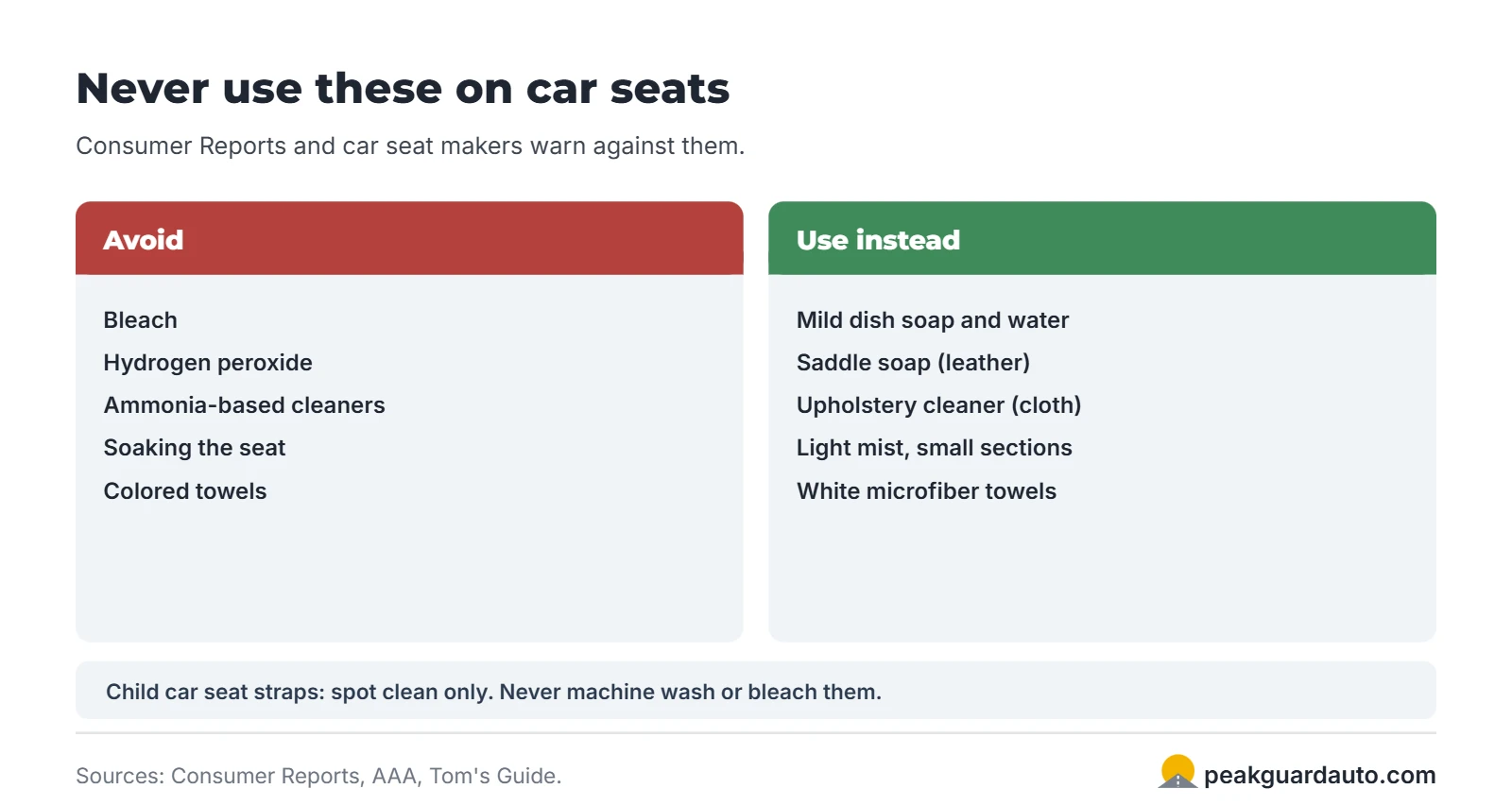
- Bleach, hydrogen peroxide and ammonia-based cleaners. Consumer Reports says these can damage upholstery and the coatings on your car’s screens.
- Too much water. Saturated seats can grow mold and develop a musty smell.
- Colored towels. Dye can transfer to light upholstery.
- Stiff brushes on leather. They scratch the finish.
How to Clean a Child Car Seat
Child car seats need extra care, because cleaning them the wrong way can affect safety. Always follow the seat’s manual. Britax gives these general rules:
- Harness straps: spot clean with warm water and mild soap. Don’t submerge, machine wash, iron or bleach them. Soaking and harsh soaps can weaken the fibers. Replace straps that are frayed.
- Buckle: rinse with warm water only. No soap, solvents or lubricants.
- Seat cover: most should be hand washed in cold water with mild soap, unless the manual says machine washing is safe.
- After cleaning: make sure each buckle clicks firmly into place.
How Often Should You Clean Car Seats?
Knowing how to clean car seats is only half the job; doing it regularly matters too. Vacuum your seats every week or two, and wipe up spills as soon as they happen. A deeper clean every few months keeps most interiors in good shape. Cars with kids, pets or daily commutes may need it monthly, as Tom’s Guide suggests. Condition leather about every three months.
Keeping seats clean also protects your car’s value. If you lease, burns and tears in the upholstery can be charged as excess wear when you return the car, according to Kelley Blue Book. Our guide to leasing vs buying a car covers other lease-end charges.
DIY vs Professional Cleaning: What It Costs
| Option | Typical cost |
|---|---|
| DIY supplies (cleaner, brush, microfiber towels, conditioner) | $30 to $80 |
| Professional interior detail | $50 to $180 |
| Pet hair removal add-on | $30 to $75 |
Prices from a 2026 pricing survey by CostInsightHub. Professional prices vary by location and how dirty the car is.
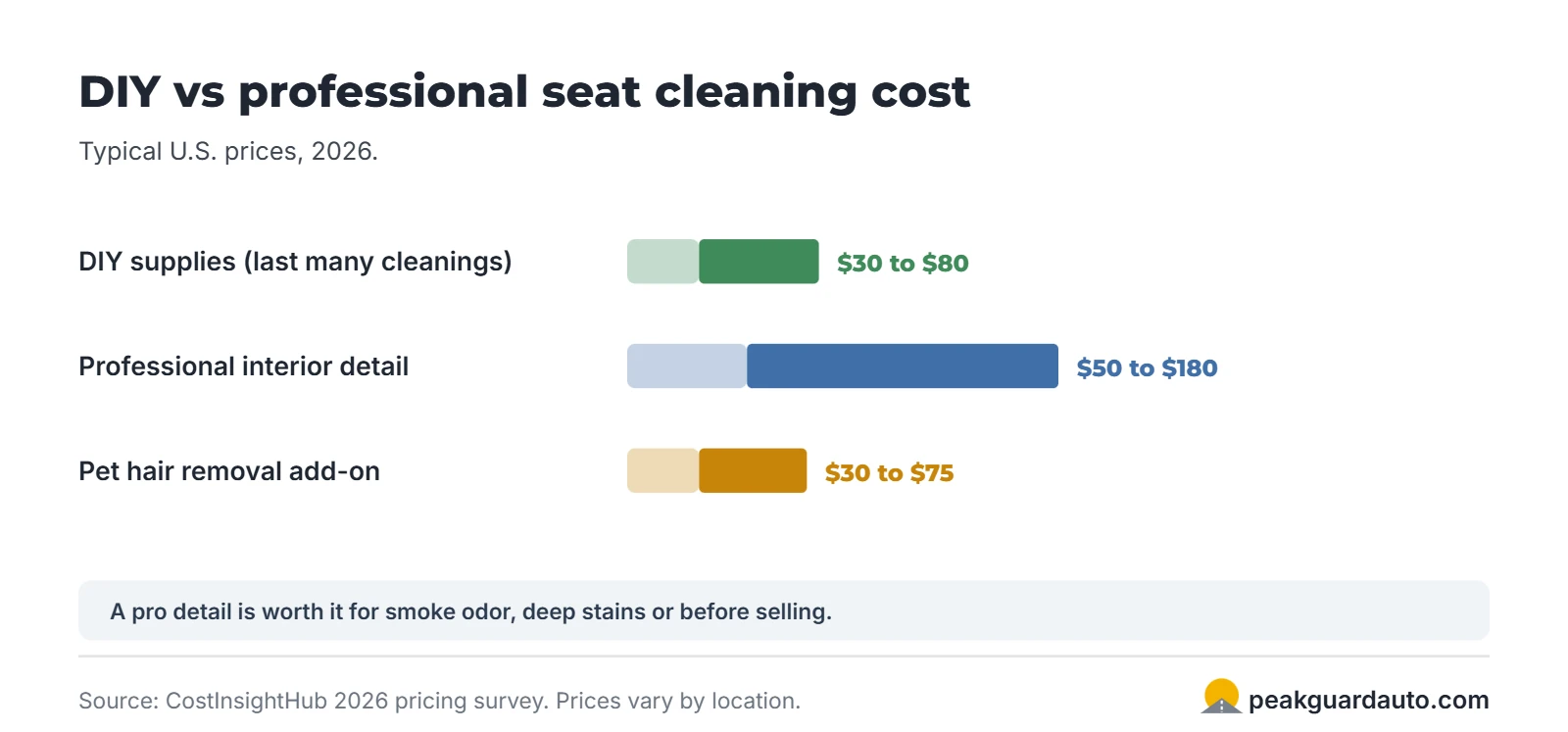
Once you know how to clean car seats yourself, the supplies last for many cleanings, so doing it yourself pays off quickly. A professional detail makes sense for heavy stains, strong odors such as smoke, or before you sell the car. For the outside of your car, see our guides on how to wash a car and how to clean cloudy headlights.
Frequently Asked Questions
What is the best way to clean cloth car seats?
Vacuum first, then lightly spray a small section with an upholstery cleaner or a mix of water and a little dish soap. Scrub gently with a soft brush, blot with a microfiber towel, and let the seat dry completely with the windows open. Use as little liquid as possible.
How do you clean leather car seats without damaging them?
Vacuum with a soft brush, then wipe with a cloth dampened with mild soap and water or saddle soap, as Consumer Reports suggests. Wipe off the soap, dry the seat and apply a leather conditioner. For perforated seats, put the cleaner on the brush rather than the seat.
Can you use vinegar on car seats?
On cloth seats, a diluted mix such as 1 cup of white vinegar, 2 cups of water and a tablespoon of dish soap is a common homemade cleaner. Test it on a hidden spot first. For leather, stick to mild soap and water or a dedicated leather cleaner.
How do I get a bad smell out of my car seats?
Sprinkle baking soda or cornflour over the seats, leave it for about an hour, and vacuum it up. Make sure the seats are fully dry after any cleaning, since damp cushions can cause a musty smell. Strong odors like smoke may need a professional detail.
Can I use bleach or hydrogen peroxide on car seats?
No. Consumer Reports advises against bleach, hydrogen peroxide and ammonia-based cleaners in your car, because they can damage upholstery and screen coatings.
How do you clean a child car seat harness?
Spot clean the straps with warm water and mild soap. Don’t submerge, machine wash or bleach them, because that can weaken the webbing. Rinse the buckle with warm water only, and always follow the car seat manual.
Conclusion
Learning how to clean car seats comes down to three rules: vacuum first, use gentle cleaners in small amounts, and dry everything completely. Cloth needs a soft brush and patience, leather needs mild soap and regular conditioning, and vinyl just needs a wipe. Skip bleach and other harsh chemicals, and your seats will look better and last longer.
Always follow your vehicle and child car seat manuals. Test any cleaner on a hidden area first.
Sources
- Consumer Reports (September 2020 magazine): safe cleaning of car interiors and products to avoid. https://www.consumerreports.org/cars/how-to-kill-coronavirus-in-your-car-without-damaging-interior-surfaces-a2151658448/
- AAA Northeast (updated June 2022): how to clean cloth and leather car seats. https://magazine.northeast.aaa.com/?p=27660
- Take 5: cleaning cloth, leather and vinyl seats, homemade cleaner. https://take5.com/blog/how-to-clean-car-seats-making-your-cloth-leather-or-vinyl-seats-look-as-good-as-new
- Tom’s Guide (March 2022): stain and odor methods, leather conditioning. https://www.tomsguide.com/how-to/how-to-clean-a-car-seat
- Britax: how to clean a child car seat. https://csus.britax.com/tips-advice/how-to-clean-a-car-seat/
- CostInsightHub (April 2026): car detailing price ranges. https://costinsighthub.com/us/auto/how-much-does-car-detailing-cost
- Kelley Blue Book: lease return wear charges. https://www.kbb.com/car-advice/returning-a-lease-vehicle/