
Quick Answer: Leasing usually means a lower monthly payment, about $602 a month for a new gas car versus $765 for a new car loan in mid-2026, according to Experian. But over five years, buying typically costs less, because you keep a car that still has value. Lease if you drive fewer than about 12,000 miles a year and want a new car every few years. Buy if you drive a lot or keep cars for six years or more.
Key Takeaways
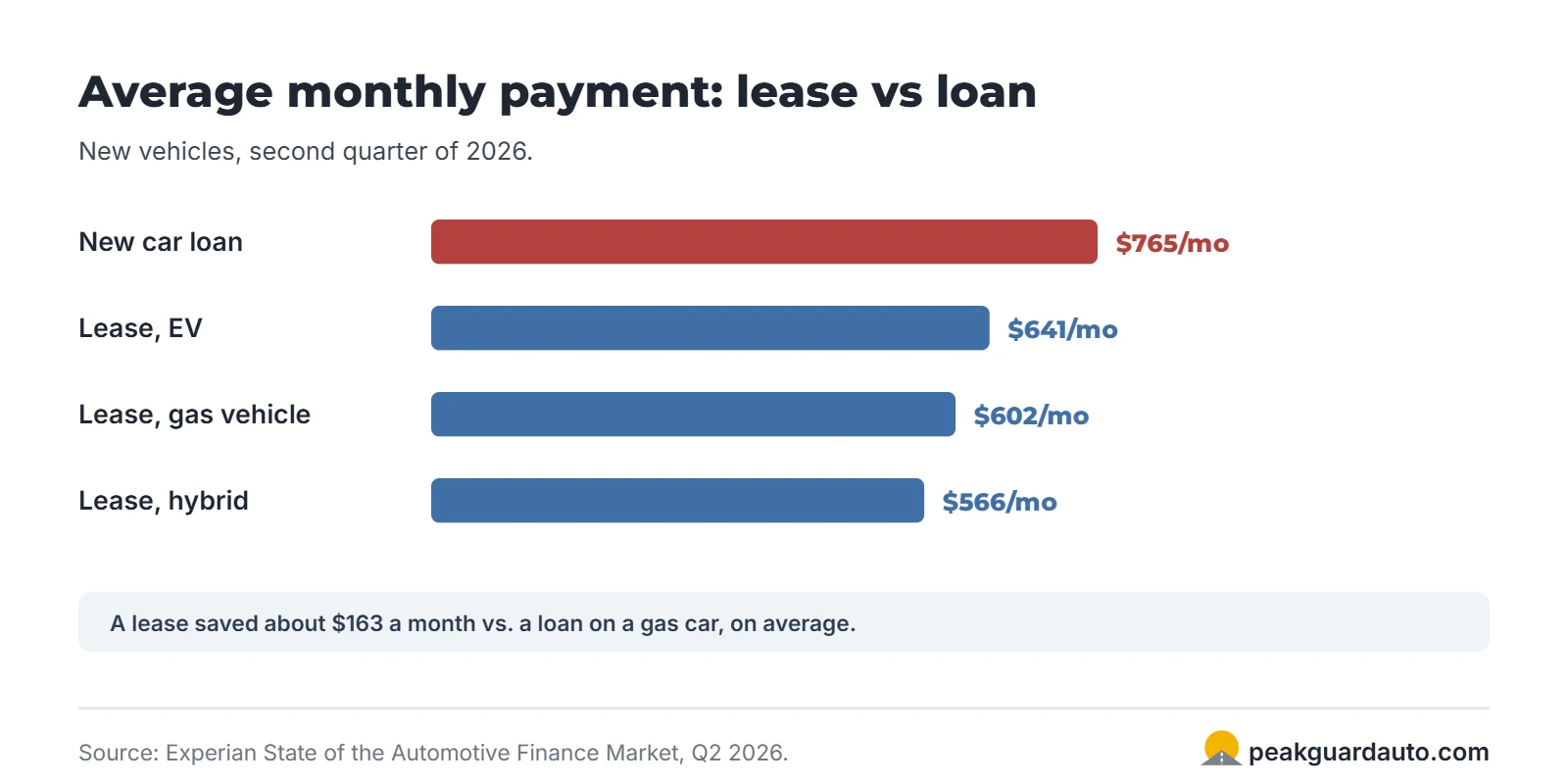
- A lease cost about $163 a month less than a new car loan on average in the second quarter of 2026.
- Over five years, buying came out about $5,000 cheaper in our estimate, and the buyer still owns the car at the end.
- Mileage limits are the biggest lease trap. Most leases allow 10,000 to 15,000 miles a year, and going over typically costs 15 to 25 cents a mile.
- Lease-end fees add up. Expect a disposition fee of about $400 plus charges for wear beyond normal use.
- The longer you keep a car, the more buying wins. Once the loan is paid off, you drive with no payment.
The monthly payment is the number every dealer leads with, and a lease almost always wins that comparison. But a lower payment isn’t the same as a lower cost. This guide compares leasing vs buying a car using real 2026 payment data, shows what each option costs over five years, and explains the fees that catch lease customers by surprise.
Table of Contents
Leasing vs Buying a Car: How Each Works
Buying means you pay for the whole car, usually with a loan. When the loan is paid off, the car is yours to keep, sell or trade in. You can drive as much as you want and modify it however you like.
Leasing is closer to renting. You pay for the part of the car’s value you use up during the lease, usually two to four years, plus a finance charge. At the end, you return the car or buy it for a price set in the contract. The Consumer Financial Protection Bureau notes that you generally can’t simply return a leased car early and stop paying.
That difference explains why lease payments are lower: you’re paying for a slice of the car, not the whole thing.
Monthly Payments: Lease vs Loan in 2026
Here are the average monthly payments for new vehicles in the second quarter of 2026, according to Experian:
| Financing type | Average monthly payment |
|---|---|
| New car loan | $765 |
| Lease, gas vehicle | $602 |
| Lease, hybrid | $566 |
| Lease, electric vehicle | $641 |
Loans keep getting bigger. In the third quarter of 2026, Edmunds found the average new car payment hit a record $787, with an average APR of 7.0% and an average term of 70.5 months. A quarter of new car loans now run 84 months or longer.
About 24% of new vehicles were leased in the second quarter, according to Experian, so leasing is a mainstream choice, not a niche one.
The 5-Year Cost: Which Is Really Cheaper?
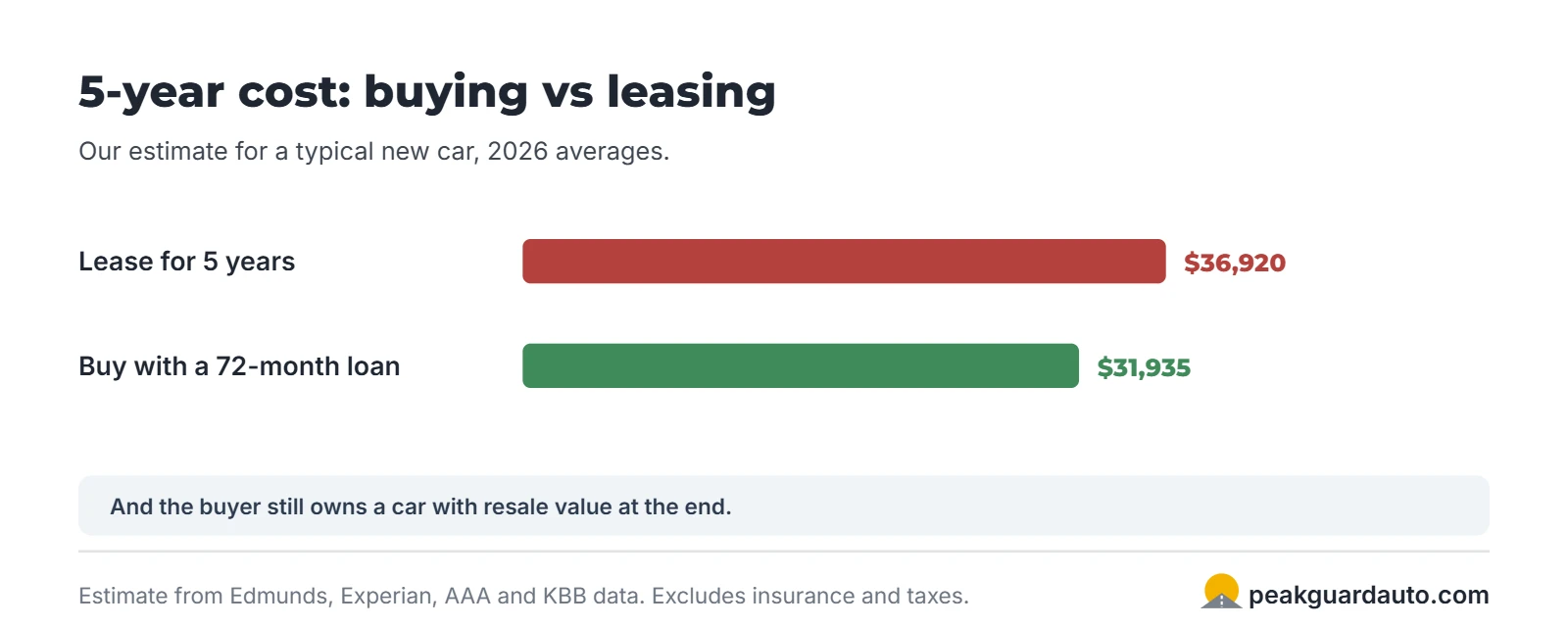
To compare leasing vs buying a car fairly, you need to look past the payment. Here’s our estimate of what five years of driving a typical new car costs each way, using 2026 averages:
| Buy | Lease | |
|---|---|---|
| Monthly payment | about $761 (72-month loan) | $602 |
| Interest paid over 5 years | about $9,825 | built into payment |
| Value lost to depreciation over 5 years | about $22,110 | built into payment |
| Lease-end fees | none | about $800 (two leases) |
| Total 5-year cost | about $31,935 | about $36,920 |
| What you have at the end | a 5-year-old car you own | nothing |
How we calculated it: For buying, we used the average amount financed of $44,664 at 7.0% for 72 months (Edmunds), which gives a payment of about $761. Over five years, about $9,825 of your payments go to interest. AAA estimates depreciation for a new car at about $4,422 a year, or $22,110 over five years. For leasing, we used Experian’s average gas lease payment of $602 for 60 months, plus two disposition fees of about $400 each, since a five-year period usually means two leases. We left out insurance, maintenance, taxes and upfront fees, which you pay either way.
The result: buying cost about $5,000 less over five years in this example, and the gap keeps growing after that. Once your loan is paid off, you can drive for years with no car payment, while a lease payment never ends.
These are estimates based on averages. Your numbers depend on the car, your credit, your down payment and the deal you negotiate.
The Mileage Trap
Leases come with a yearly mileage limit, usually between 10,000 and 15,000 miles, according to the Consumer Financial Protection Bureau. Go over, and you pay for every extra mile when you return the car. Kelley Blue Book reports that most mass-market leases charge 15 to 25 cents a mile.
The average licensed driver covers 13,735 miles a year, according to the Federal Highway Administration. That’s more than many standard 12,000-mile leases allow.
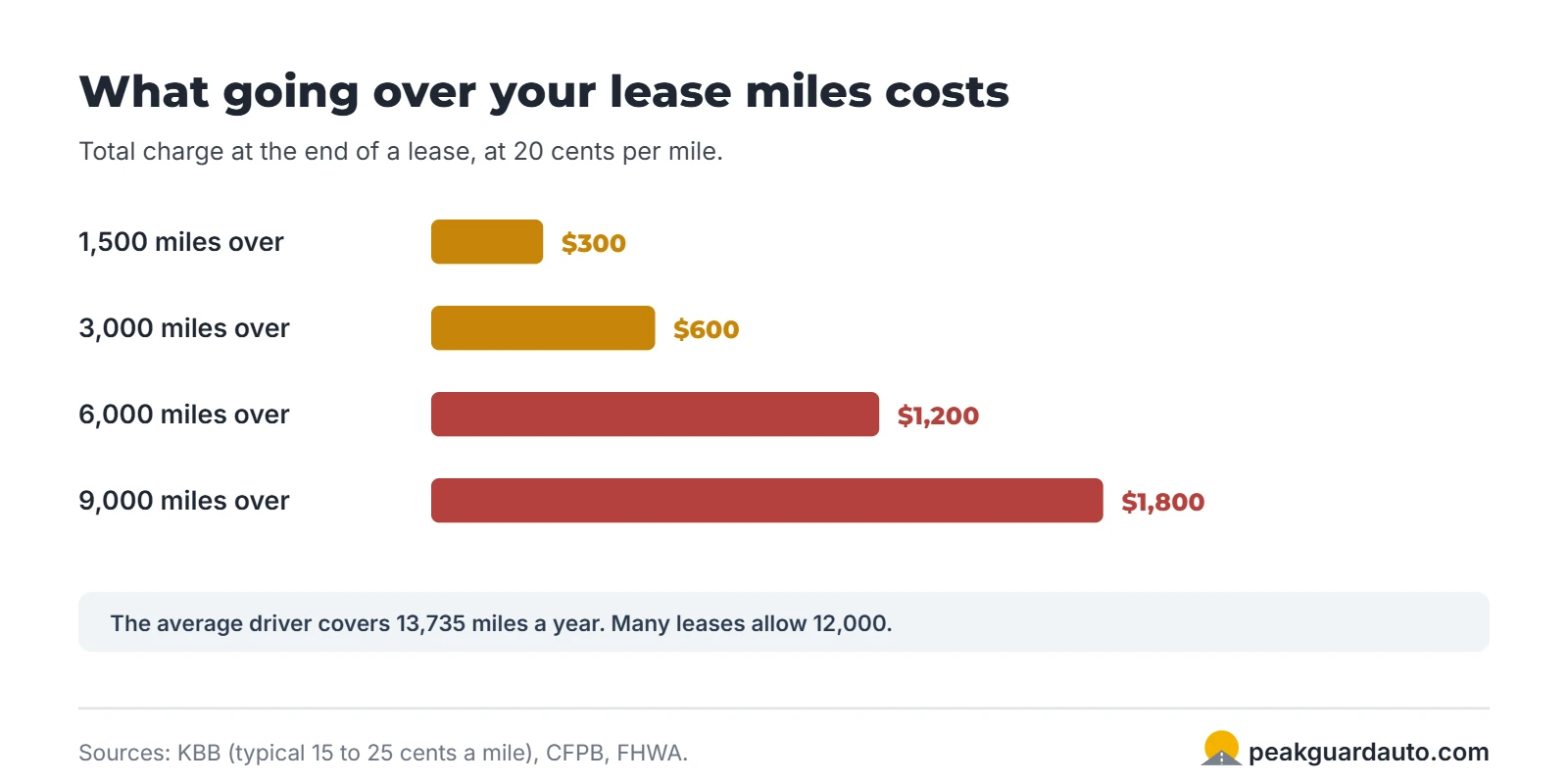
At 20 cents a mile, here’s what going over costs at the end of a three-year lease:
| Miles over the limit (total) | Extra charge at 20 cents a mile |
|---|---|
| 1,500 | $300 |
| 3,000 | $600 |
| 6,000 | $1,200 |
| 9,000 | $1,800 |
If you know you’ll drive more, buy extra miles when you sign. It’s usually cheaper upfront than at the end, and it makes the true cost visible before you commit.
Lease-End Fees and Charges
When you return a leased car, expect some or all of these, according to Kelley Blue Book:
- Disposition fee: about $400, charged if you don’t buy the car or lease another from the same brand.
- Excess wear charges: for damage beyond normal use. Examples include scratches longer than three inches, wheel scrapes longer than an inch, chips larger than a quarter, tires with less than 3 mm of tread, windshield damage, and burns or tears in the upholstery. Dealers often waive the first $500 of wear.
- Excess mileage charges: as shown above.
- Early termination costs: ending a lease early can be very expensive, the CFPB warns.
Tip: Get the car inspected a few weeks before your lease ends. You’ll have time to fix small damage yourself, often for less than the leasing company would charge. Our guide on how to remove scratches from a car can help with minor marks.
When Leasing Makes Sense

Leasing can be the right choice if you:
- drive fewer than about 12,000 miles a year
- want a new car every two to four years with the latest safety tech
- prefer to stay under the factory warranty the whole time you drive
- need a lower monthly payment and accept that you won’t build equity
- keep your car in good condition, with no pets or heavy wear
When Buying Makes Sense
Buying is usually the better deal if you:
- drive more than about 15,000 miles a year
- plan to keep the car six years or longer
- want to modify the car or use it for heavy work
- have kids, pets or a rough commute that cause wear
- want to stop making car payments eventually
If you buy, keep the loan as short as you can afford. A 72- or 84-month loan lowers the payment but adds thousands in interest. Before you buy, learn what the average car really costs to own, and if you’re shopping used, use our used car buying checklist.
Smart Middle Options
- Buy a lightly used car. A two- or three-year-old car has already taken the steepest depreciation, often coming off a lease.
- Lease, then buy. If you love your leased car and stayed under the miles, compare the buyout price in your contract with its market value. If the buyout is lower, buying it can be a good deal.
- Negotiate either way. The price of the car matters for both a lease and a loan. Our guide on how to negotiate a car price works for new cars too.
Frequently Asked Questions
Is it better to lease or buy a car in 2026?
For most people who keep cars for many years, buying costs less overall. In our five-year estimate, buying was about $5,000 cheaper than leasing, and you own the car at the end. Leasing is better if you drive little, want a new car every few years, and value a lower monthly payment.
How much is the average lease payment in 2026?
Experian reported average new lease payments of $602 for gas vehicles, $566 for hybrids and $641 for electric vehicles in the second quarter of 2026. The average new car loan payment was $765.
What happens if you go over the miles on a lease?
You pay a fee for each extra mile when you return the car. Most mass-market leases charge 15 to 25 cents a mile, according to Kelley Blue Book. Going 3,000 miles over at 20 cents costs $600.
What fees do you pay at the end of a lease?
Common charges include a disposition fee of about $400, excess mileage fees and charges for wear beyond normal use. Some dealers waive the first $500 of wear, and the disposition fee is often waived if you lease another car from the same brand.
Can you end a car lease early?
Usually, but it can be very expensive. The CFPB warns that early termination charges can be high, and you can’t simply return the car and stop paying. Options include a lease transfer, if your contract allows it, or buying out the lease.
Is leasing a waste of money?
Not always. You pay for the use of a new car without owning it, which costs more over time than buying and keeping a car. But for low-mileage drivers who want a new car every few years, a lease can be a reasonable trade-off.
Conclusion
When it comes to leasing vs buying a car, leasing wins on the monthly payment. Buying wins on total cost for most drivers, especially those who drive more than average or keep their cars for years. Before you sign either deal, compare the full cost over the time you’ll drive the car, not just the payment, and check the lease’s mileage limit against how much you really drive.
Payment and rate data are 2026 averages. Your costs depend on the vehicle, your credit and the deal you negotiate.
Sources
- Edmunds (October 1, 2026): Q3 2026 new car financing data. https://www.edmunds.com/press/new-car-financing-records-pile-up-in-q3-as-buyers-borrow-more-and-stretch-loans-longer-according-to-edmunds.html
- Experian (August 27, 2026): Q2 2026 automotive finance data, lease payments and lease share. experianplc.com: Experian Q2 2026 automotive finance report
- Consumer Financial Protection Bureau: leasing vs buying a car. https://www.consumerfinance.gov/ask-cfpb/what-should-i-know-about-leasing-versus-buying-a-car-en-815/
- Kelley Blue Book: returning a leased car, mileage and wear charges. https://www.kbb.com/car-advice/returning-a-lease-vehicle/
- AAA Your Driving Costs (September 15, 2026): depreciation and ownership costs. https://mwg.aaa.com/news/press-release/september-15-2026
- Federal Highway Administration, Our Nation’s Highways 2026: average miles per driver. https://www.fhwa.dot.gov/policyinformation/pubs/our_nations_highways_2026/drivers.cfm