
Quick Answer: Before buying a used car, set a total budget, run the VIN through free NHTSA and NICB checks, get a vehicle history report, inspect the body, interior, engine bay and tires, test drive it on varied roads, and pay about $200 for an independent mechanic’s inspection. Read the dealer’s Buyers Guide carefully: there’s no federal right to return the car afterward.
Key Takeaways
- Rule cars out early with free VIN checks from NHTSA (open recalls) and NICB (theft, salvage and flood records).
- A history report is useful, but the FTC says it’s not a substitute for an independent inspection.
- A pre-purchase inspection typically costs about $186 to $273 and can save you thousands.
- Dealers must post a Buyers Guide showing whether a car is sold “as is” or with a warranty.
- There’s no federal 3-day cancellation right, so finish every check before you sign.
Buying a used car can save you thousands compared with buying new, but it’s also where expensive surprises hide. With the average used car listed at $27,027 in June 2026, according to Kelley Blue Book, one bad purchase is a costly mistake. The good news is that most problem cars give themselves away if you know where to look. This used car buying checklist walks you through 25 checks in the order you’ll actually use them, from your couch to the seller’s driveway to the signing table. Print it or keep it open on your phone.
Table of Contents
Before You Go: Research and Free Checks
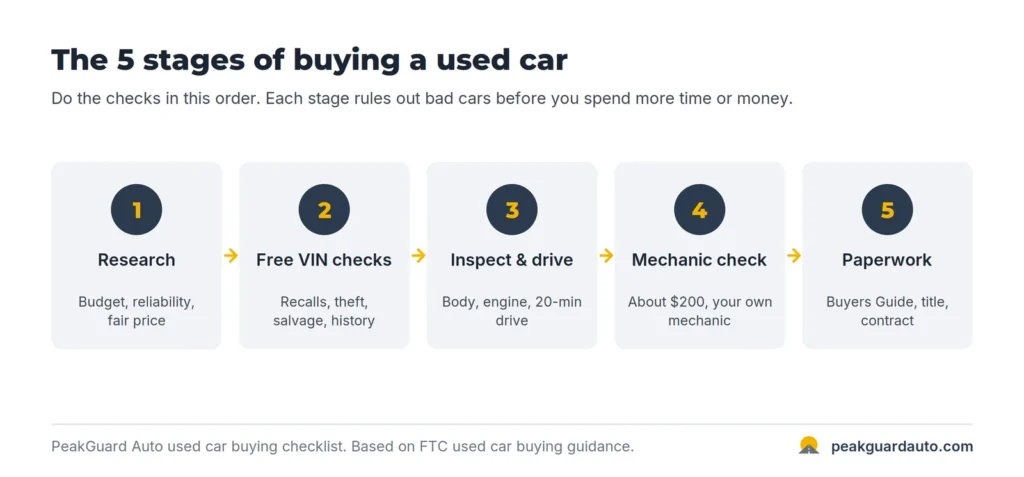
The most useful checks happen before you ever see the car. They rule out bad options and save you wasted trips.
1. Set your total budget, not a monthly payment. Decide what you can spend in total, including tax, registration and insurance. The FTC advises focusing on the total cost with financing, not just the monthly payment, because a low payment can hide a long, expensive loan. Our guide to the real cost of owning a car helps you estimate the ongoing costs too.
2. Get loan pre-approval if you’re financing. A quote from a bank or credit union gives you a rate to compare against dealer financing, so you know whether their offer is actually good.
3. Research reliability for the exact model and year. Some model years have well-known problems (a transmission, an engine or an electrical issue) that later years fixed. Look up owner reviews and reliability ratings for the specific year you’re considering.
4. Check fair market value. Use a pricing guide such as Kelley Blue Book to see what the car is worth based on its mileage, trim and condition. This gives you a starting point for negotiation.
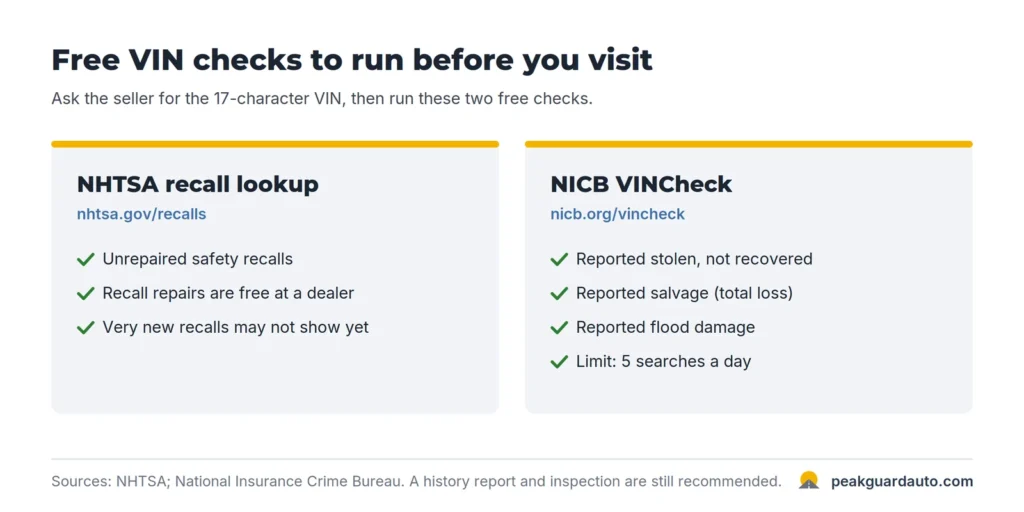
5. Ask for the VIN and run the free checks. The 17-character vehicle identification number unlocks the car’s records. Two free checks come first:
- NHTSA recall lookup at nhtsa.gov/recalls shows whether the car has unrepaired safety recalls. Recall repairs are free at a dealer, but you want them done.
- NICB VINCheck at nicb.org/vincheck shows whether participating insurers reported the car stolen and not recovered, or as salvage or flood-damaged. It’s free, with a limit of five searches a day.
6. Get a vehicle history report. Paid reports list reported accidents, title brands, ownership history and sometimes service records. Reports based on the government’s NMVTIS title database are one option. If a seller refuses to share the VIN, treat that as a serious red flag.
7. Call the seller with a few questions. Ask why they’re selling, whether there are service records, whether the title is in their name and whether the car has been in an accident. Vague or inconsistent answers are a reason to walk away.
At the Car: Exterior, Interior and Engine Bay
Look at the car in daylight, on level ground, with the engine cold. A seller who has “warmed it up for you” may be hiding a hard-starting engine.
8. Walk around the body. Look along each side for waves, dents and rust, especially around wheel wells, door bottoms and the rocker panels under the doors. Mismatched paint shades between panels or overspray on rubber trim often mean bodywork after an accident.
9. Check panel gaps. The gaps between the hood, doors, fenders and trunk should be even on both sides. Uneven gaps can point to past collision repair.
10. Inspect the glass and lights. Look for windshield cracks or chips, then test every light: headlights, brake lights, turn signals and reverse lights.
11. Check the tires. Uneven wear on one edge can point to alignment or suspension problems. Check the tread depth with a gauge or the penny test (insert a penny head-first; if you can see all of Lincoln’s head, the tread is worn out). Mismatched brands on the same axle suggest the car has had inconsistent care.
12. Look for flood damage. Smell the carpets for a musty odor, lift a floor mat to feel for dampness, and look for silt, water lines or rust in odd places such as seat rails and under the dash.
13. Test everything inside. Run the air conditioning and heater, windows, locks, mirrors, seat adjusters, infotainment screen, USB ports and backup camera. Repairs to electrical features add up quickly.
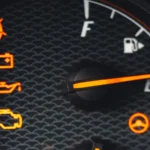
14. Read the dashboard at startup. When you turn the key, the warning lights should come on briefly and then go out. A check engine or airbag light that stays on, or never lights up at all, needs explaining.
15. Open the hood. Check the oil (it shouldn’t look milky or gritty), the coolant level and the condition of belts and hoses. Look for leaks, fresh fluid stains under the car, or an engine that’s suspiciously spotless on an older vehicle.
16. Check the odometer against the records. The mileage should match the history report and service records, and the wear on the seats, pedals and steering wheel should look consistent with it.
The Test Drive
Plan at least 20 to 30 minutes, including city streets, a highway and a rough patch of road if you can.
17. Listen at startup and idle. Knocking, ticking, squealing belts or rough idling are all worth noting for your mechanic.
18. Test the transmission. Shifts should be smooth and prompt. Slipping, hesitation, clunks or a delay when shifting into drive or reverse can mean costly repairs.
19. Test the brakes. Brake firmly from moderate speed on a safe, empty road. The car should stop straight, without pulling, vibration or grinding. Our brake pad guide explains which sounds mean what.
20. Check steering and suspension. On a straight road the car should track straight with the steering wheel centered. Clunks over bumps, excessive bouncing or a wandering feel suggest worn suspension or steering parts.
21. Look for smoke and smells. After the drive, check the exhaust. Blue smoke can mean the engine is burning oil; thick, sweet-smelling white smoke can signal a coolant problem. A burning smell or fluid drips after the drive are red flags.
Paperwork, Inspection and Closing the Deal
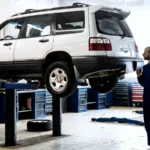
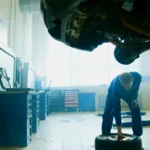
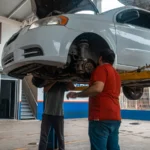
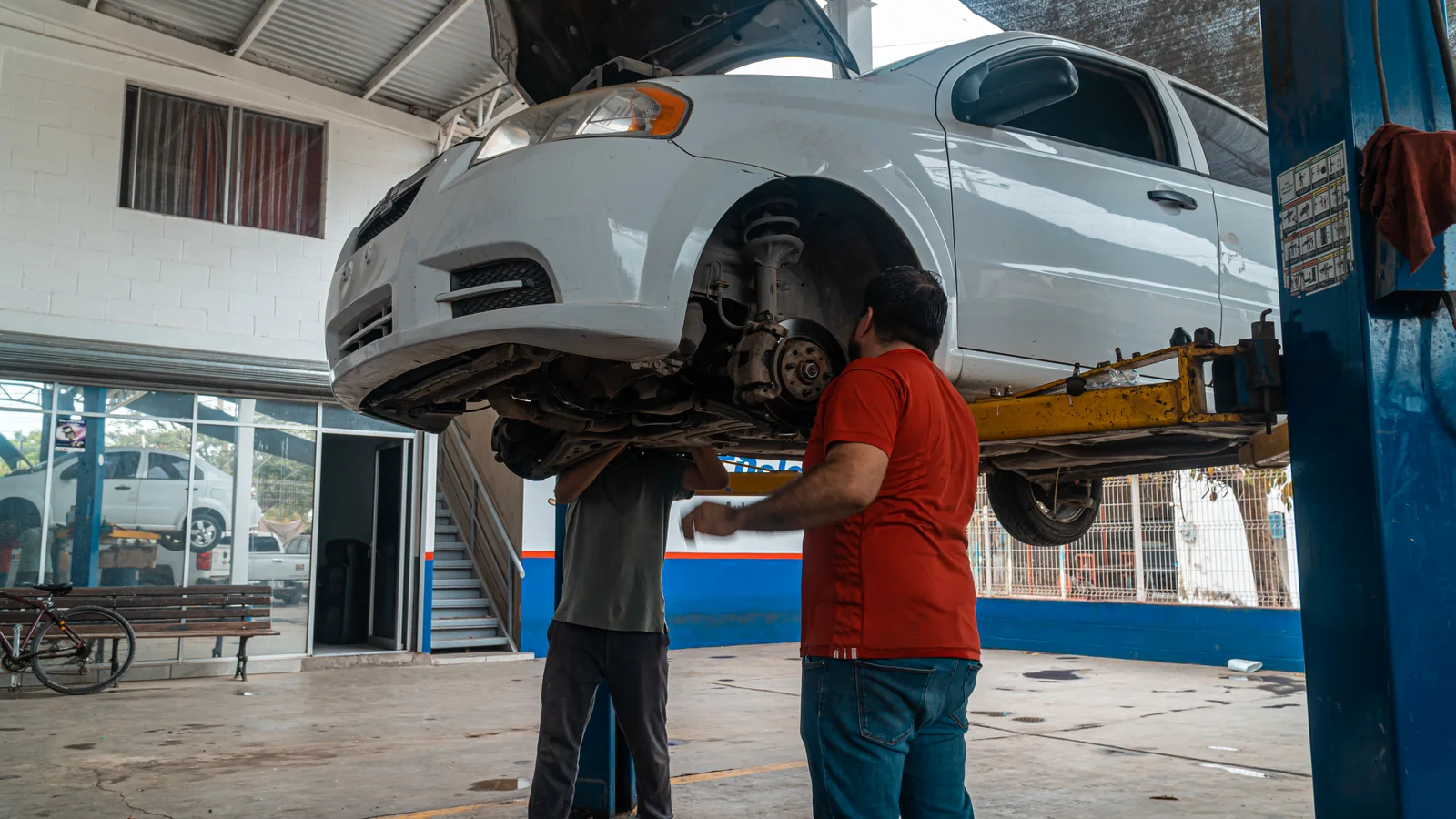
22. Get an independent pre-purchase inspection. This is the single most valuable step. According to ConsumerAffairs, citing RepairPal estimates, an inspection costs about $186 to $273, usually around $200, and takes an hour or two. Choose your own mechanic, not one the seller recommends. The FTC notes that a history report “is not a substitute for an independent vehicle inspection,” because reports usually don’t capture mechanical problems. A seller who won’t allow an inspection is telling you something.
23. Read the Buyers Guide (dealer sales). The FTC requires dealers to display a Buyers Guide on used cars. It shows whether the car is sold “as is” (no dealer warranty) or with a warranty, and what share of repair costs the dealer will pay. Keep a copy with your purchase paperwork, and make sure any warranty promised in person is written on it.
24. Check the title carefully. The name on the title should match the seller’s ID, and the VIN on the title should match the car (usually visible at the base of the windshield and on the driver’s door jamb). Watch for title brands such as salvage, rebuilt or flood, and ask about any lien, meaning a lender that still has a claim on the car.
25. Review the contract before signing. Check the price, fees, interest rate, loan length and any add-ons such as service contracts or protection packages. Don’t sign anything with blank spaces. Remember that federal law doesn’t give you three days to cancel a car purchase, according to the FTC. Some states have their own rules, but most sales are final once you sign.
Dealer vs. private seller
| Dealer | Private seller | |
|---|---|---|
| Price | Usually higher | Often lower |
| Buyers Guide | Required by the FTC | Not required |
| Warranty options | Sometimes, including certified pre-owned | Almost always “as is” |
| Financing and paperwork | Handled for you | You handle title transfer and registration |
| Trade-in | Usually accepted | No |
| Main risk | Add-ons and fees in the contract | Title problems, unknown history, scams |
Based on FTC guidance on buying used cars. Rules for private sales vary by state.
With a private seller, meet in a safe public place, confirm the seller’s ID matches the title, and use a traceable payment method such as a cashier’s check at the seller’s bank. Never wire money for a car you haven’t seen.
Red Flags That Mean Walk Away
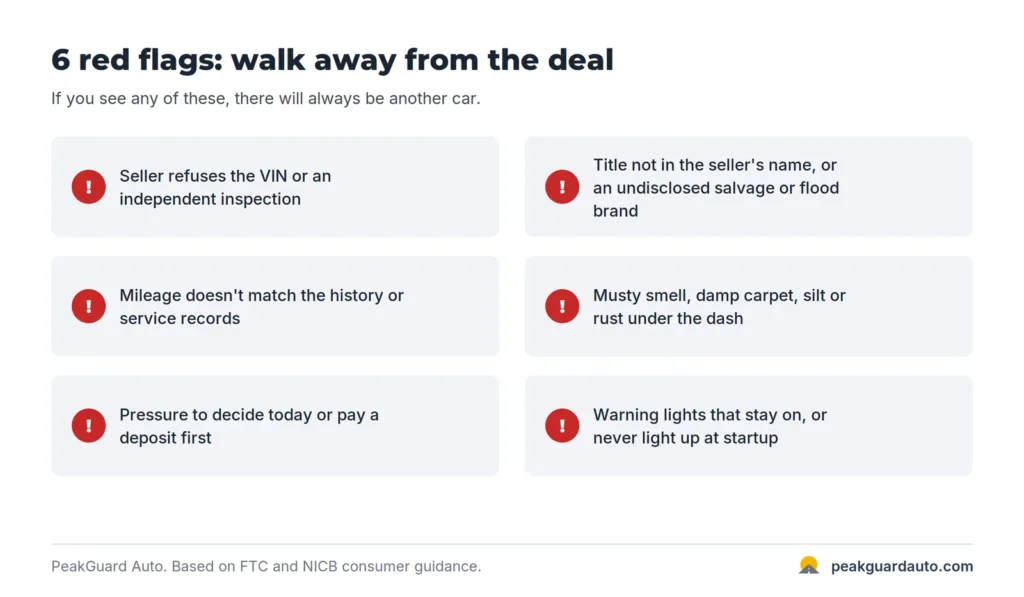
- The seller won’t share the VIN or allow an independent inspection
- The title isn’t in the seller’s name, or it’s branded salvage or flood and wasn’t disclosed
- The mileage doesn’t match the records
- Signs of flood damage, such as a musty smell, silt or rust under the dashboard
- Pressure to decide today or pay a deposit before an inspection
- Warning lights that stay on, or a dashboard where they never light up
There will always be another car. Walking away from a bad one is the cheapest decision you’ll make.
Frequently Asked Questions
What is the most important thing to check when buying a used car?
An independent pre-purchase inspection by a mechanic you choose. It typically costs about $200 and can reveal mechanical problems that neither a test drive nor a history report will show.
Is a vehicle history report enough?
No. History reports list reported accidents, title brands and ownership, but the FTC notes they’re not a substitute for an independent inspection. Many problems never get reported, so pair the report with a mechanic’s inspection.
Can I return a used car after buying it?
Usually not. Federal law doesn’t give buyers a three-day right to cancel a car purchase. Some states have limited rules, and some dealers offer return policies, but get any return promise in writing before you sign.
What does “as is” mean on a used car?
It means the dealer offers no warranty, so you’re responsible for any repairs after the sale. The FTC-required Buyers Guide on the car’s window tells you whether it’s sold as is or with a warranty.
How do I check if a used car has been in a flood?
Run the VIN through NICB’s free VINCheck, get a history report, and inspect the car for musty smells, damp carpets, silt and rust in unusual places like seat rails. An independent mechanic can also check for water damage.
How long should a used car test drive be?
Aim for at least 20 to 30 minutes, covering city streets, a highway and rougher roads. That’s enough time for the engine to warm up and for problems with the transmission, brakes and suspension to show.
How do I check for open recalls?
Enter the VIN at nhtsa.gov/recalls. The free search shows unrepaired safety recalls from participating manufacturers, and recall repairs are done free at a franchised dealer.
Conclusion
A careful used car purchase comes down to doing the checks in the right order: rule out bad cars with free VIN checks, inspect and test drive the ones that pass, and let an independent mechanic have the final say before any money changes hands. Read the Buyers Guide and the contract closely, because most sales are final once you sign. Keep this checklist handy, take your time, and don’t be afraid to walk away.
PeakGuard Auto provides general informational guidance only. Laws, fees and consumer protections vary by state. Always have a qualified mechanic inspect a vehicle before purchase and read all documents carefully before signing.
Sources
- Federal Trade Commission: Buying a Used Car From a Dealer (Buyers Guide, no cooling-off period, inspections, financing). https://consumer.ftc.gov/articles/buying-used-car-dealer
- NHTSA: Recall lookup by VIN and free recall repairs. https://www.nhtsa.gov/recalls
- National Insurance Crime Bureau: VINCheck free theft and salvage lookup. https://www.nicb.org/vincheck
- U.S. Department of Justice: National Motor Vehicle Title Information System (NMVTIS). https://vehiclehistory.bja.ojp.gov/
- ConsumerAffairs (RepairPal data, September 2026): pre-purchase inspection costs and what’s checked. https://www.consumeraffairs.com/automotive/what-is-a-pre-purchase-inspection.html
- Kelley Blue Book: average used-car listing price, June 2026. https://www.kbb.com/car-news/average-used-car-price-tops-27000/